Why Does My Safety Switch Keep Tripping? Common Causes in Toowoomba Homes
That Familiar Click From the Switchboard
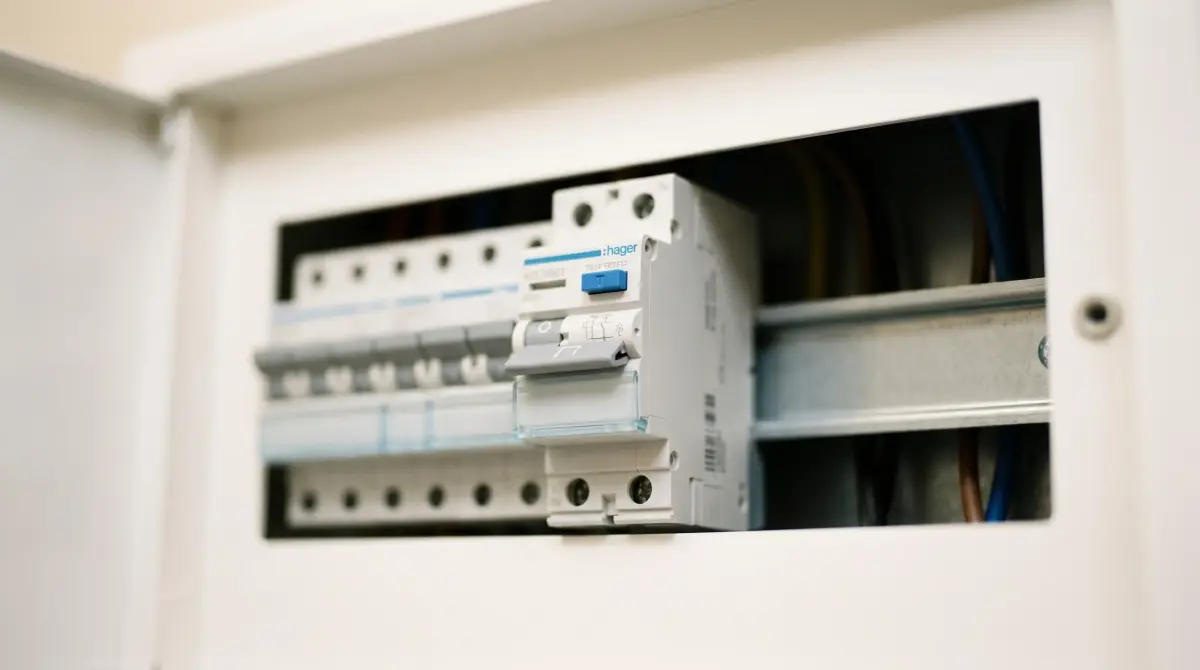
It is a common scenario in Toowoomba homes. The power suddenly drops out in one section of the house. You walk to the switchboard and find a safety switch (also known as an RCD) has tripped. You reset it, the power comes back, and you get on with your day. But if it keeps happening, something is going on that needs attention.
The frustrating thing about a tripping safety switch is that it is usually doing exactly what it is supposed to do. It is detecting current leaking somewhere it should not be, and it is cutting the power to protect you from electric shock. So whilst it is annoying, ignoring it is genuinely dangerous. The trick is working out what is causing the fault.
Faulty Appliances Are the Most Common Culprit
Of all the RCD tripping calls I attend in Toowoomba, faulty appliances account for the majority. An appliance with an internal electrical fault, like a deteriorating heating element in a kettle, moisture getting into an outdoor pump, or a failing compressor motor in an older fridge, can leak current to earth. The RCD detects that leakage and trips.
The usual suspects are kettles and toasters with ageing heating elements, outdoor pumps (pool pumps, water tank pumps, greywater systems) that have taken on water, older fridges and freezers with failing motors, washing machines with damaged heating elements, hot water systems with element faults, and power tools with worn brushes or damaged cords. The good news is that an appliance fault is usually the simplest cause to identify and fix.
Wiring and Circuit Faults
Damage to the electrical wiring inside your walls, ceiling, or conduit can create an earth leakage fault that triggers the RCD. This is harder to track down than a faulty appliance because the problem is hidden.
Rodent damage is surprisingly common. Rats and mice chew through cable insulation in roof spaces and wall cavities, and Toowoomba's suburban and semi-rural properties see a fair bit of this. If the tripping started suddenly without any change in weather or appliances, and you have heard rodent activity in the roof, pest damage is worth investigating.
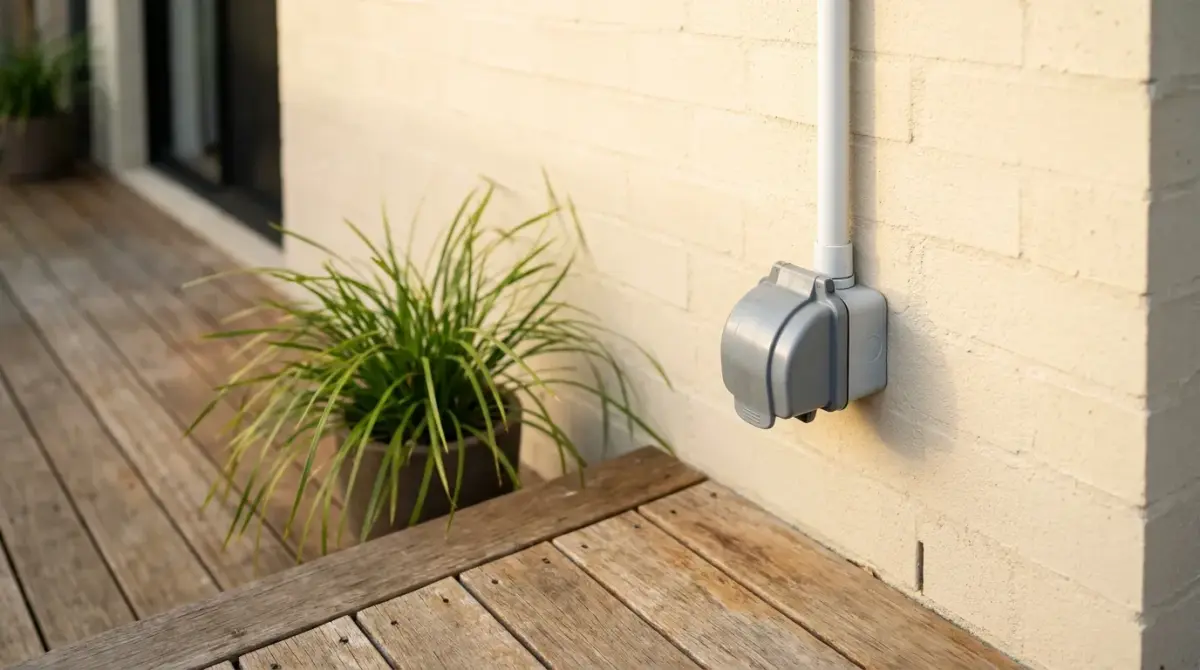
Water ingress is another major cause, and Toowoomba's weather patterns make it particularly relevant. Summer storms drive rain into outdoor power point covers. Sprinkler systems spray directly onto outdoor outlets. Leaking roofs allow water into ceiling-mounted downlights and junction boxes. Failed bathroom seals let water behind tiles and into exhaust fan housings. Even eave lights and antenna penetrations can allow enough moisture in to trip an RCD.
Deteriorating insulation in older wiring (particularly pre-1980s rubber or cloth-covered cables), nails or screws driven through walls during renovations, and poor workmanship from previous electrical jobs can all cause wiring faults that show up as persistent RCD tripping.
Nuisance Tripping
Sometimes an RCD trips without an actual dangerous fault being present. This happens when multiple appliances with small, normal leakage currents all run simultaneously on the same circuit. Each appliance leaks a tiny amount of current individually (within safe limits), but the combined leakage pushes the total past the RCD's 30mA threshold.
High humidity and wet weather increase natural leakage, which is why some Toowoomba homeowners notice more tripping during summer storms. Older RCDs can also become more sensitive over time, tripping at lower thresholds than they should. And electronic appliances with switching power supplies can create harmonic currents that contribute to the problem.
The distinction matters. Nuisance trips tend to be intermittent and weather-related. Genuine faults cause consistent, repeatable tripping and usually point to a specific appliance or circuit.
The RCD Itself Can Be the Problem
RCDs are designed to be reliable, but they are not immune to failure. Components deteriorate over time, particularly in switchboards exposed to moisture, in RCDs that are more than 15 years old, in units that have tripped many times over their life, or in switchboards that have been hit by power surges or lightning strikes. A faulty RCD might become too sensitive (tripping below 10mA, causing constant nuisance tripping) or, more dangerously, not sensitive enough, failing to trip when it should.
What You Can Safely Check Yourself
If your RCD trips, there is a basic troubleshooting process you can try before calling an electrician. But a word of caution: do not proceed if you are unsure or uncomfortable, or if there are any signs of damage like burning smells or sparks. Safety first, always.
Start by resetting the tripped RCD at the switchboard. If it trips again immediately before you have touched anything else, the fault is persistent and likely in the fixed wiring or a hard-wired appliance. Skip ahead and call G-TEC Electrical.
If the RCD stays on, unplug every appliance on the affected circuits from the wall socket. Do not just turn the power point off, physically remove the plug. People commonly forget about the fridge, dishwasher (often tucked behind cabinetry), rangehood, outdoor pumps, garage door openers, and NBN equipment. With everything unplugged, reset the RCD. If it stays on, you know the fault is in one of the appliances rather than the wiring.
Now plug appliances back in one at a time, turning each one on and letting it run for a minute or two before connecting the next. When one specific appliance causes the RCD to trip, you have found your culprit. Leave it unplugged and either get it repaired properly or replace it.
If the RCD still trips with everything unplugged, or if it trips immediately upon reset, the fault is in the fixed wiring, a hard-wired appliance (hot water system, oven, cooktop, air conditioner), or the RCD itself. That is when you need an electrician.
Want this sorted properly?
Every job's different, so Glenn looks at it before he puts a number on it. The person who quotes is the person who turns up.
What Fault Finding Looks Like
When the appliance isolation test does not solve the problem, specialised diagnostic equipment is essential. I use insulation resistance testers (meggers) that apply 500 to 1000 volts to test cable insulation integrity, earth leakage clamp meters that measure actual leakage current on individual circuits, RCD testers that verify the device is operating within Australian Standard specifications, and thermal imaging cameras that identify overheating connections.
This equipment lets me measure exact leakage current levels, test insulation resistance on individual circuits, verify RCD trip times and sensitivity, and locate hidden faults in wall and ceiling spaces without trial and error.
RCDs in Australian homes are rated at 30mA because research shows that currents above 30mA passing through the human body can cause muscle contractions that prevent release, breathing difficulties, heart rhythm disturbances, and potentially death. An RCD must trip within 300 milliseconds at 30mA to provide adequate protection under AS/NZS 3000. New RCDs typically trip around 20 to 25mA, while aged RCDs may drift to 15 to 20mA, becoming more sensitive over time.
Overload Versus Earth Fault
It is worth understanding the difference between your RCD tripping and your circuit breaker tripping, because they protect against different problems. RCDs detect current flowing where it should not (to earth), protecting against electric shock and the kind of earth faults that create arcing and fire risk. Circuit breakers detect overload and short circuits, protecting cables from overheating.
If your circuit breaker is tripping rather than your RCD, the issue is likely too many appliances on one circuit or a short circuit, not an earth fault. Most household circuits are rated for 10 to 20 amps (2,400 to 4,800 watts at 240 volts). A bar heater pulls 2,400 watts and a kettle draws another 2,400 watts. Run both simultaneously and you are already at the limit of a 20 amp circuit. Add anything else and the breaker trips.
When to Call and When to Wait
The appliance isolation process is safe to try yourself during daylight hours, provided there is no burning smell, no visible damage to the switchboard or outlets, no sparks or arcing, no recent water damage or storms, and you feel comfortable working at the switchboard.
Call G-TEC Electrical immediately if there is any burning smell from the switchboard, outlets, or anywhere in the house. Do not attempt troubleshooting if you see sparks or smoke, if there has been recent water damage or active water ingress, if the RCD trips instantly on reset with no delay, if multiple RCDs trip simultaneously, if you have received any electric shock however minor, if the switchboard feels warm, or if you hear buzzing or crackling sounds.
Why You Cannot Fix Wiring Faults Yourself
Under the Queensland Electrical Safety Act 2002, only licensed electricians can perform electrical work. DIY electrical work is prohibited (except changing light globes and plug-in appliances), and unlicensed work can void your insurance, attract penalties, and put your family at serious risk. If the appliance isolation test does not resolve the tripping, the next step is always to call a licensed electrician, not to start pulling apart power points or light fittings.
What Fault Finding Costs
Fault finding is time based, because nobody knows how long a hidden fault takes to find until they start looking. On the RCD jobs I've done around Toowoomba, the initial diagnostic visit has generally landed between $150 and $250. That covers getting out to you, the assessment and testing, working out where the fault actually sits, and a price for the repair if one is needed. A fair few of the appliance-type faults get sorted inside that first visit.
From there it depends on the house. A single circuit wiring fault is usually an hour or two. Testing across several circuits takes longer again, and a fault that needs walls or ceilings opened up takes longer still. Repairs sit on top of the fault finding and move with what has actually failed: swapping a power point or an RCD is at the small end, chasing a damaged cable buried in a wall or ceiling is at the other. Access, ceiling height and the age of the wiring shift all of it.
Every house is different, so I'd rather look at it than guess down the phone. Give me a ring on 0489 082 307 and I'll tell you what I find.
Do Not Just Keep Resetting It
A tripping safety switch is a warning. The RCD is tripping because current is flowing to earth, and that current could be flowing through a person. Earth leakage faults can create heat and arcing in walls or ceilings, damage expensive appliances, void insurance coverage if the fault was known and not addressed, and create disclosure obligations when selling the property.
Under Queensland legislation, all final subcircuits must have RCD protection, RCDs must be tested regularly, and electrical faults must be repaired by licensed electricians. If you are experiencing frequent RCD tripping in your Toowoomba home, get it diagnosed properly. Call Glenn on 0489 082 307 and I'll come and have a proper look at it.