Choosing the Right Smoke Alarm for Your Queensland Home
The Smoke Alarm Question I Get Asked Every Week
Since Queensland started phasing in its smoke alarm laws, with homes being sold or leased already covered and every owner-occupied home needing to comply by 1 January 2027, I reckon half the calls I get start the same way: "Glenn, which smoke alarm do I actually need?" It's a fair question. The rules changed, the options are confusing, and nobody wants to spend money on the wrong thing or, worse, find out their alarms won't work in a real fire.
I've been installing and replacing smoke alarms for over a decade now, and I've seen firsthand what happens when people choose the wrong type or put them in the wrong spot. So let me break it down properly.
Photoelectric vs Ionisation Alarms
There are two main types of smoke alarm, and they detect fires in completely different ways.
Photoelectric smoke alarms use a light beam inside a sensing chamber. When smoke particles enter the chamber, they scatter the light onto a sensor, and the alarm triggers. These are the type Queensland now requires by law, and for good reason. They're brilliant at detecting smouldering fires, which are the most common type of house fire. Think overheated wiring behind a wall, a cigarette butt caught in upholstery, or a heater left too close to curtains. These fires produce thick, visible smoke long before flames break out, and photoelectric alarms pick that up fast.
They're also far less likely to go off every time you burn the toast, which means people actually leave them connected instead of ripping the battery out in frustration.
Ionisation alarms work differently. They use a tiny amount of radioactive material to create an electrical current, and when small smoke particles from a fast-flaming fire disrupt that current, the alarm sounds. They're quicker at detecting the kind of fire where paper or grease catches alight with open flames. But they're much slower to detect smouldering fires, and they're notorious for nuisance alarms from cooking steam and shower humidity. Queensland Fire and Emergency Services stopped recommending them years ago, and they're no longer compliant for new installations.
What Queensland Law Actually Requires
The legislation rolled out in stages, and the requirements are pretty specific. As of 1 January 2022, any home being sold or leased must have photoelectric smoke alarms that are interconnected (so all alarms sound together when one detects smoke), powered by either hardwired mains with battery backup or a 10-year sealed lithium battery, and installed in every bedroom, every hallway connecting bedrooms, and on each level of multi-storey homes.
New builds and major renovations have had to comply since 2017. The final deadline hits on 1 January 2027, when all existing owner-occupied homes must meet the full requirements. If you're planning to wait until 2027, I'd suggest thinking about whether your family deserves that protection now rather than later.
Old 9-volt battery alarms are no longer compliant. Ionisation alarms are no longer legal for new installations in Queensland dwellings regardless of age. If you've still got either type, they need to go.
Getting the Placement Right
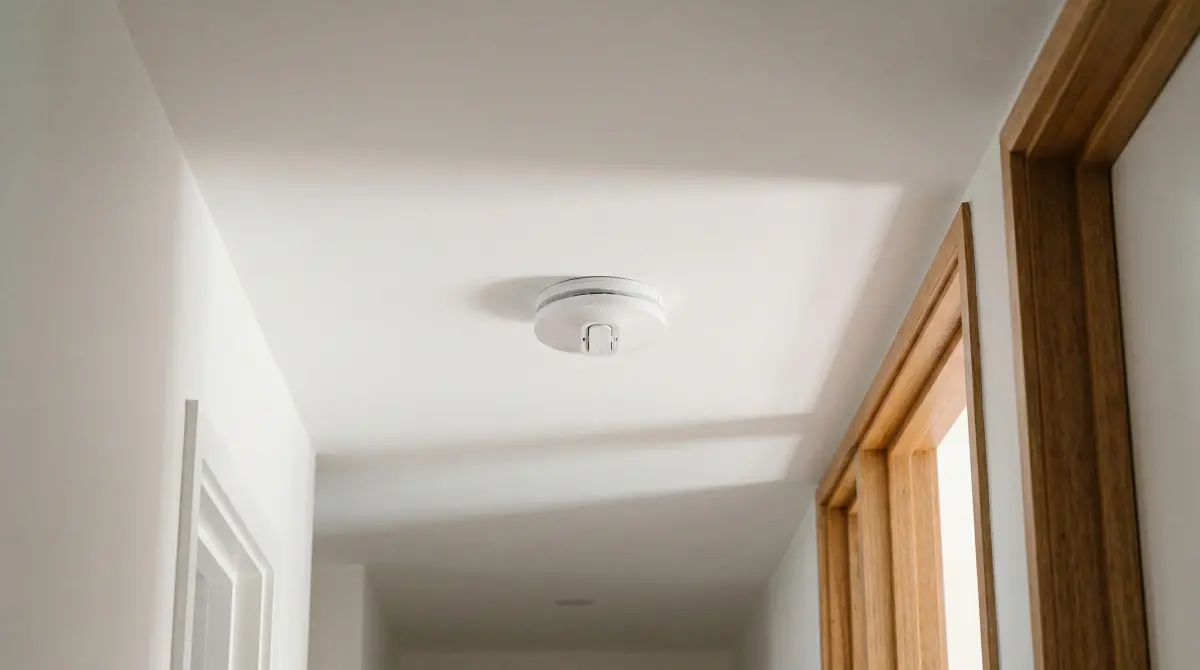
Where you put your alarms matters just as much as what type you buy. Queensland law mandates alarms on the ceiling of every bedroom, ideally at least 300mm from walls and cornices. You also need one in any hallway that connects bedrooms to the rest of the house, plus at least one on each level of a multi-storey home.
Beyond the legal minimums, I recommend putting alarms in living rooms and family areas too, and near (but not inside) kitchens. Steam from cooking causes nuisance alarms, so keep them at least 3 metres from any stovetop. Avoid installing them in corners where airflow is poor, and keep them clear of ceiling fans and air conditioning vents that might blow smoke away from the sensor.
The big advantage of interconnected alarms is that if a fire starts in the garage at 2am, the alarm in your bedroom goes off too. That extra warning time can genuinely save lives, especially for heavy sleepers or families with kids at the other end of the house.
Want this sorted properly?
Every job's different, so Glenn looks at it before he puts a number on it. The person who quotes is the person who turns up.
Battery or Hardwired: Which Should You Choose?
G-TEC Electrical specialises in 10-year sealed lithium battery photoelectric alarms with wireless interconnection, and there's a good reason for that. They meet all Queensland compliance requirements, they don't need battery replacements for a decade, and they're far less invasive to install than running cables through your ceiling.
For heritage homes and older Toowoomba properties with ornate pressed metal ceilings or V-joint walls, wireless systems are really the only sensible option. Running cables through those surfaces damages original features that you can't get back. A wireless interconnected system gives you full compliance without touching the heritage elements.
Hardwired alarms connected to your mains power with battery backup are still a solid option for new builds or major renovations where the walls and ceilings are already open. But for most existing homes, sealed battery units with wireless interconnection are the smarter choice.
On jobs I've done, 10-year sealed lithium photoelectric alarms supplied and installed have generally landed between $135 and $180 an alarm. That covers the unit, the install, setting up the wireless interconnection, testing and a Certificate of Compliance. What moves it is ceiling access, how high the ceilings are and how many go in on the one visit. A typical 3-bedroom home needing 4 or 5 alarms has come in somewhere between $550 and $900, and a 4-bedroom home with 5 or 6 between $700 and $1,100.
Heritage and Character Homes Need Extra Thought
Toowoomba has some gorgeous heritage homes, and they present unique challenges for smoke alarm installation. High ornate ceilings are difficult to access, and you really don't want visible wiring running across pressed metal or VJ boards. I use wireless interconnected systems with low-profile alarm designs that blend in with the architecture. I also plan for ceiling access panels so future maintenance doesn't become a drama.
For rental properties, landlords need to have alarms tested and cleaned before each new tenancy, replace faulty alarms immediately, and provide written instructions to tenants. Tenants are responsible for monthly testing and reporting any issues promptly. Neither party should ever disable or remove an alarm.
Keeping Your Alarms Working
Once your alarms are installed, maintenance is straightforward. Press the test button weekly to confirm they're working. Give them a visual check monthly for damage, dust, or warning lights. Every six months, run a vacuum cleaner with a soft brush attachment over them to clear dust from the sensors. And keep an eye on the expiry date, because even the best alarm needs replacing after 10 years.
If you're getting frequent nuisance alarms from cooking, the fix is usually repositioning the alarm further from the kitchen or improving ventilation, not disconnecting it. If an alarm chirps intermittently, it typically means the battery is low (in battery models) or there's dust in the sensing chamber. An alarm that won't sound at all during testing needs replacing straight away.
Making the Right Choice
Choosing the right smoke alarm for your Queensland home really comes down to three decisions. First, go photoelectric, because it's both the law and the safer option. Second, choose interconnected systems so every alarm in your home sounds together. Third, plan your placement carefully to cover bedrooms, hallways, and each level.
If you're not sure what you've got, whether your alarms are compliant, or how many you need, give me a call. I'll come out, assess your home, and give you a straight answer on what needs doing. No pressure, just honest advice from someone who does this every day.
Call Glenn on 0489 082 307 or get a free quote to sort your smoke alarm compliance.