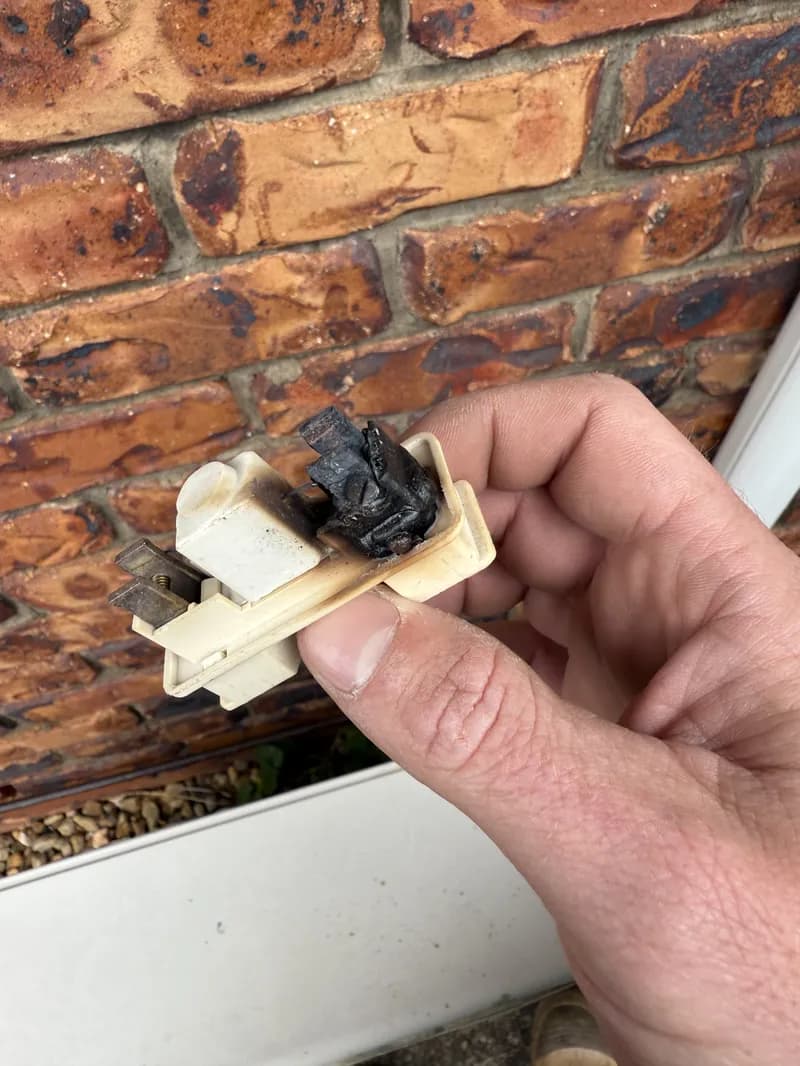
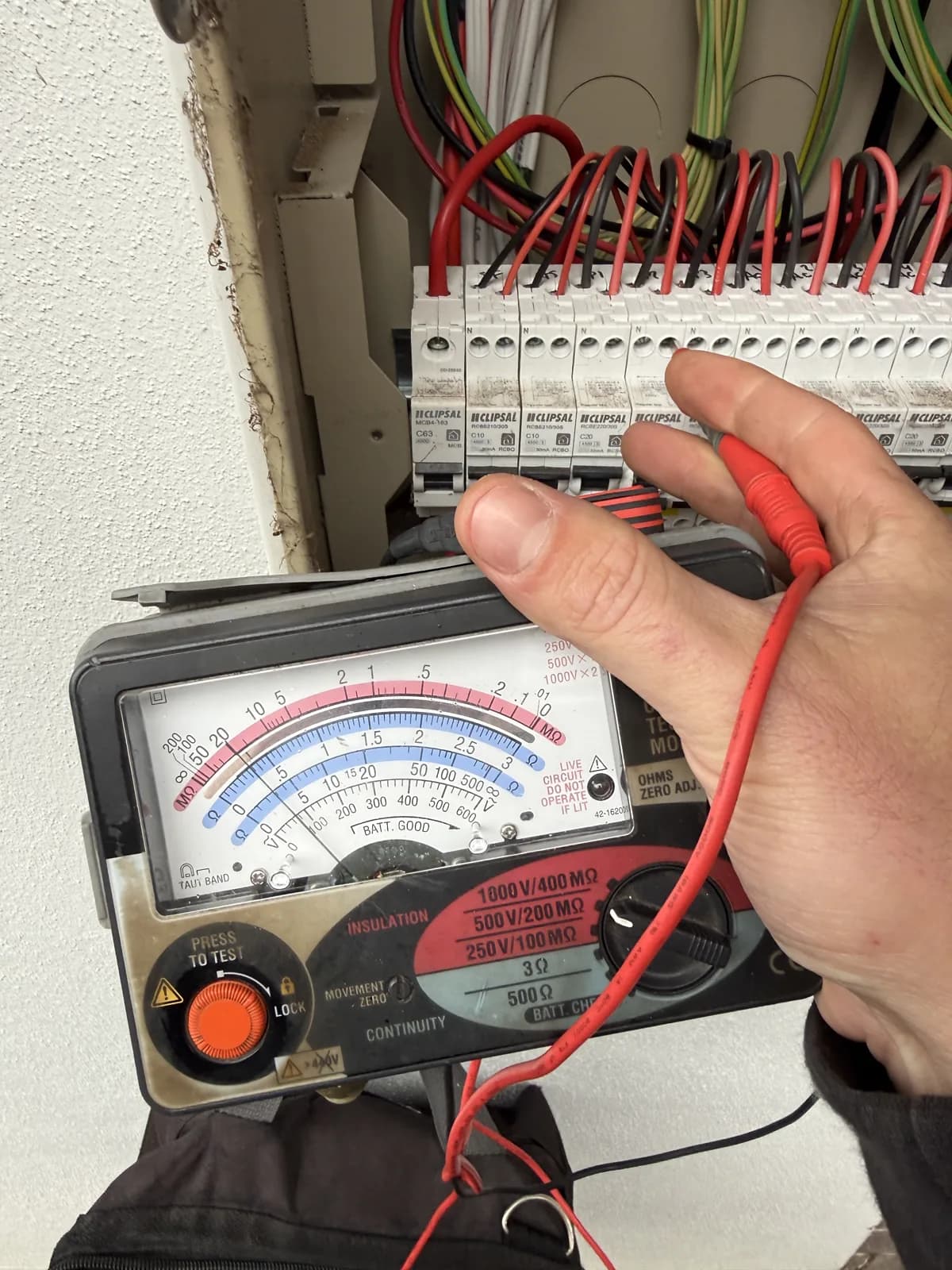
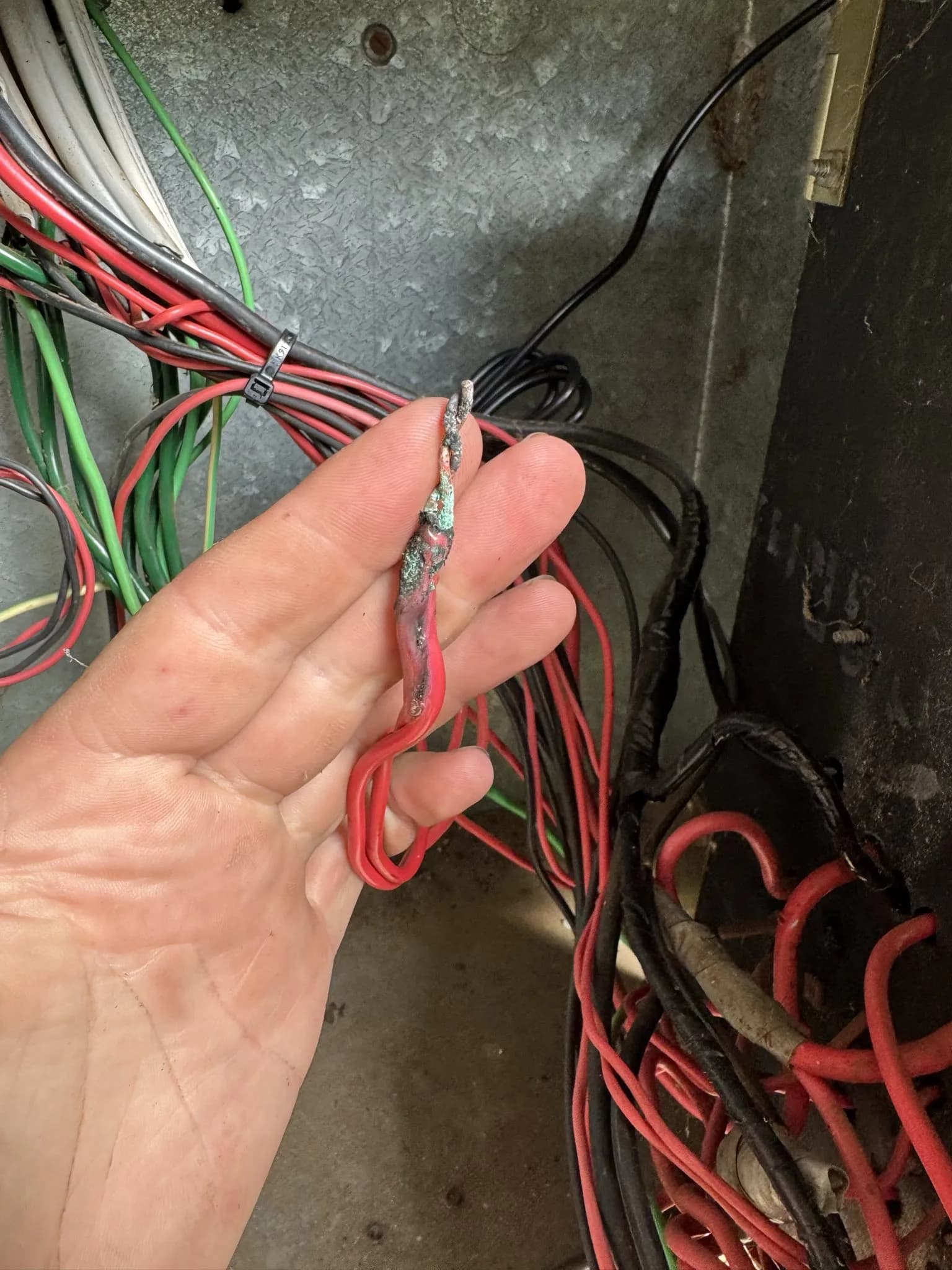
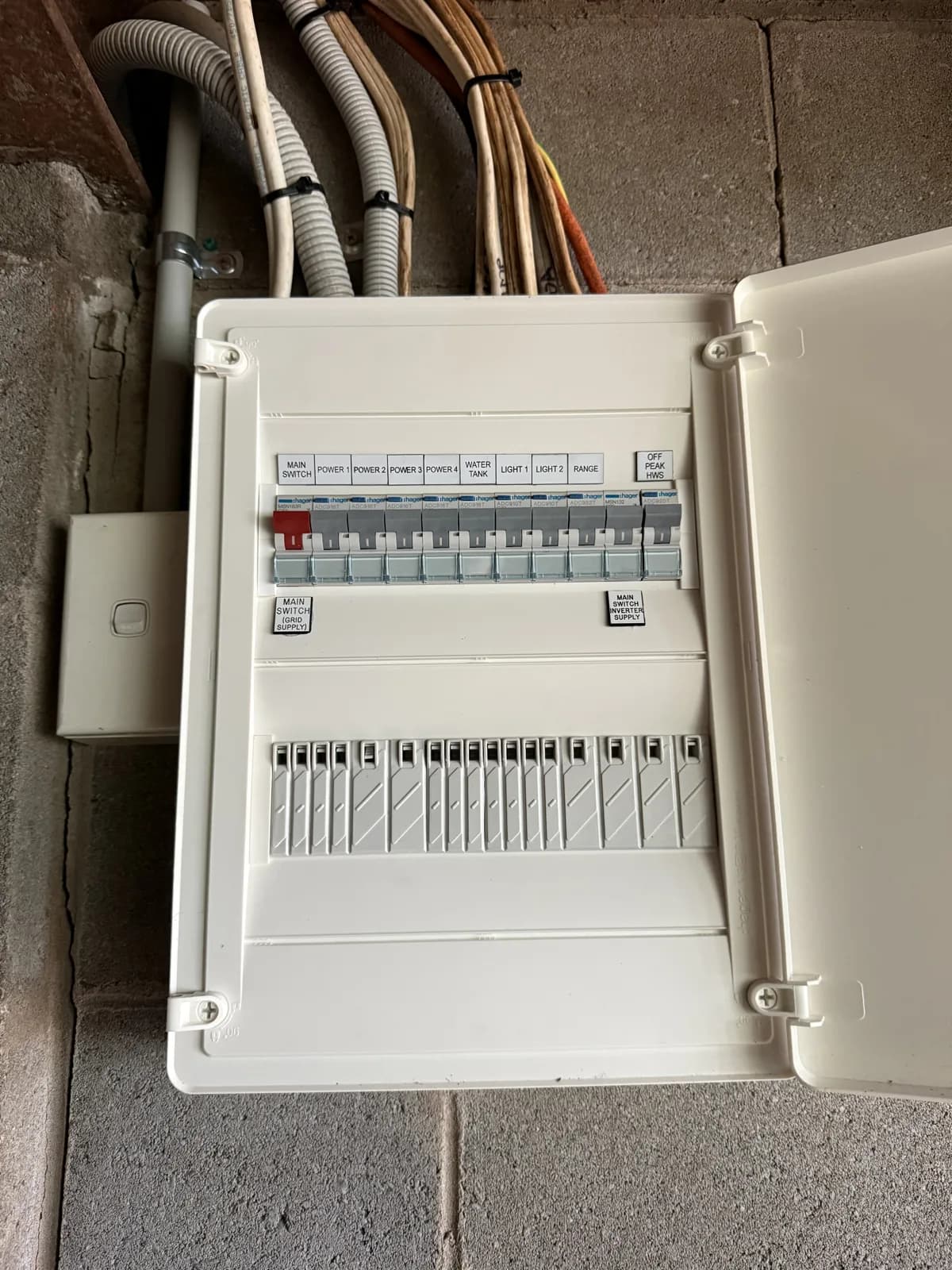
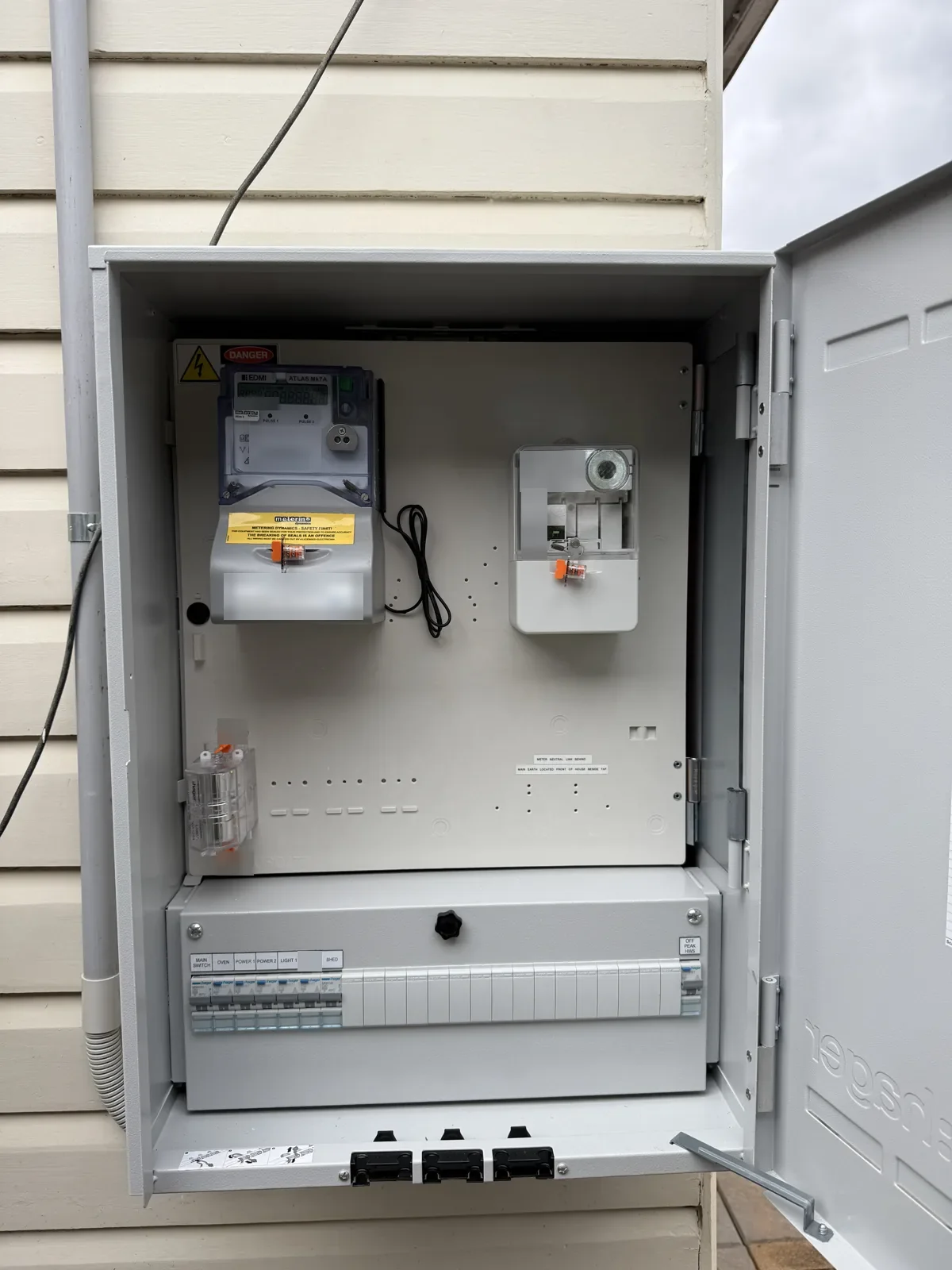
This is what most people ring about, so here's how the four causes tell themselves apart.
Overload. The circuit is being asked for more than it's rated to give. It's the predictable one: same appliances on, same trip, every time. The fix is moving load around or putting in extra capacity. Never a bigger breaker on the same cable, because then the cable cooks before the breaker lets go.
Short circuit. Current finds a path it shouldn't, wire to wire. It trips instantly and hard. Usually damaged insulation, a nail through a cable, water, or rodents. This one arcs, so it's a fire risk and it gets fixed the day it's found.
Earth fault. Current leaking to earth through tired insulation. As little as 30mA sets an RCD off, which is why an appliance can trip the safety switch without ever overloading anything. It's a shock risk.
Loose connection. The sneaky one. A poor contact heats up under load, resistance climbs, it trips, then it cools down and works fine for a week. That's why intermittent faults get blamed on the breaker and the breaker gets replaced for nothing.
If your breaker has tripped and reset once, that's worth watching. If it keeps going, stop resetting it and ring someone. Resetting into a short is how house fires start.