EV Charger Installation Cost in Toowoomba (2026 Pricing Guide)
More Toowoomba homeowners are going electric, and the first question is always the same: what does it actually cost to get a charger put in at home? The honest answer is that it depends on your place, but I can give you a fair picture of where these jobs have landed.
Here's how I price home EV charger installations. A back-to-back install, where the charger goes on the other side of the wall from your switchboard, or one right beside the board, starts from $770. That's the install, not the charger. Most supply-and-install jobs, charger included, come in at $1,500 to $2,000, depending on the installation and the style of charger you go with. Bigger installs cost more.
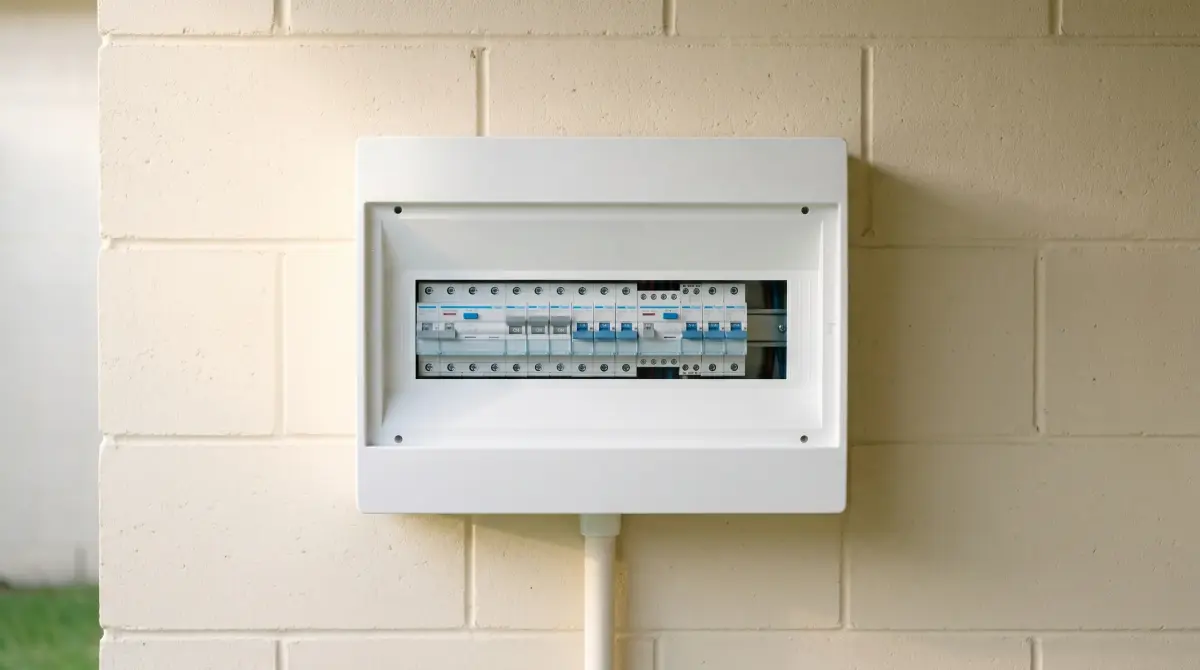
That covers a dedicated circuit out of the switchboard, correctly sized cable, Type A RCD protection, the unit mounted and connected, testing, and your compliance certification on the invoice. Where you land comes down to how far the charger sits from the board, whether the board has room for another circuit, and which charger you go with. If the switchboard needs work first, that's a separate job on top and it gets quoted on its own so you can see the split.
32 Amps Is Now the Normal Option
Until 1 October 2026, anything over 20 amps on single-phase had to sit under Ergon's active management, with a control device on the charger or a special tariff. That's why I used to put most single-phase homes on 20A.
That rule's gone. Ergon now lets a 32A (7kW) single-phase charger go on your primary tariff, which is your normal power, with no control device. 32A is as big as single-phase home chargers go, so for most homes the question now is whether the house can carry it. That comes down to your mains cable and switchboard, and I check both before I quote.
A 32A charger puts back roughly 40 to 50km of range an hour, so an overnight charge covers a normal day's driving with plenty to spare. And if you've already got three-phase, you can go up to 22kW, again with no Ergon control device.
What Moves the Price
The switchboard is the big one. If it's full, still running ceramic fuses, or has no RCD protection, it needs sorting before a charger can go on it safely. On switchboard jobs I've done, that work has generally landed between $2,000 and $5,000, depending on the board, the main cable and whether there's asbestos backing behind it.
Cable run length is next. The distance from the board to where the car parks drives both materials and labour. That's why a charger beside the board is the cheapest install there is. Longer runs cost more, and I measure yours and tell you what it adds. The cable has to be sized for the load and the distance, because undersized cable means voltage drop and a genuine safety problem, not just slow charging.
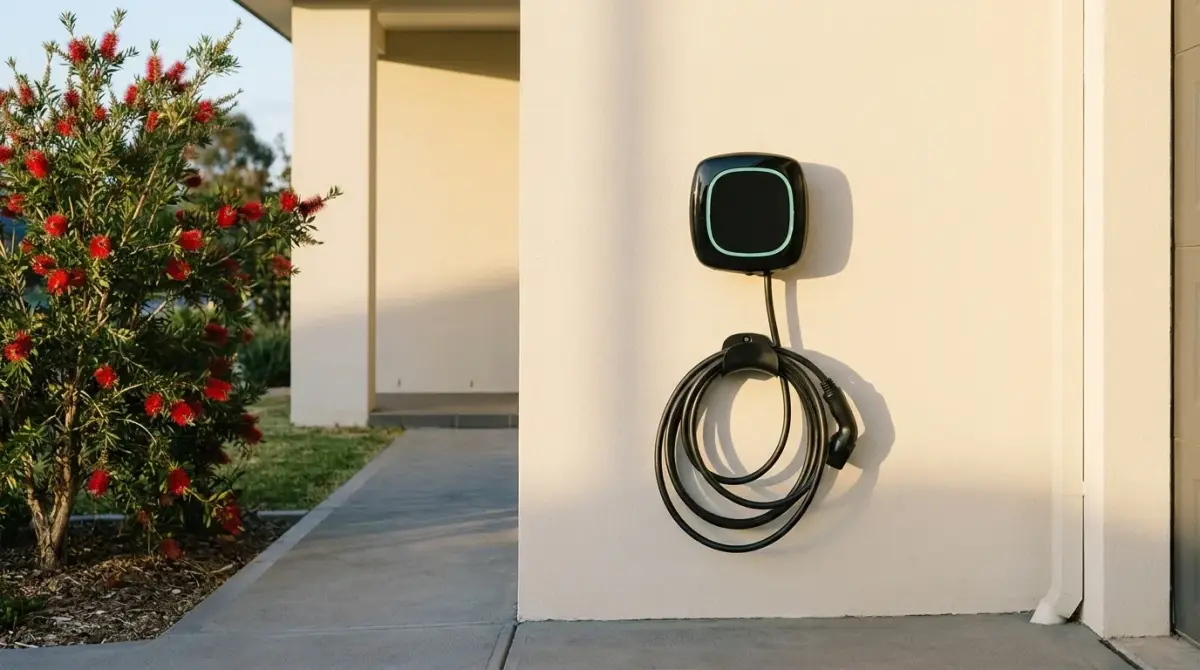
Then there's where the charger goes. A wall in the garage near the board is the easy version. Brick and masonry are standard, timber and fibre-cement are quicker. Outdoors is fine, the Ocular units I use are rated for it (IP55 or better), though anything that switches on and off has to sit at least a metre and a half from a gas cylinder. A post out on the driveway for a house with no garage means trenching for underground cable, and that's one of the bigger installs.
The charger itself moves things too. A plain unit with a tethered cable sits at the bottom of the range. A smart one with app control, scheduling and solar monitoring sits at the top. I use Ocular, an Australian company with support you can actually reach and a three year warranty on the hardware.
If you've only got single-phase and you want three-phase brought in, that's a different conversation again. It's a supply upgrade with Ergon involved, it isn't cheap, and not every property can get it.
If you want a number for your own place rather than a range, ring me on 0489 082 307 and I'll come and look at the board and the cable run.
Want this sorted properly?
Every job's different, so Glenn looks at it before he puts a number on it. The person who quotes is the person who turns up.
How Long It Takes
Most jobs are half a day. A straightforward install with the board right there runs one to two hours. A typical job with a proper cable run is two to four. If the switchboard has to come out first you're into four to six hours or more. And if your supply needs upgrading, Ergon sets its own timing for that, and I'll tell you what they've said.
What Charging at Home Actually Costs
This part is just arithmetic, and it's worth doing before you spend anything.
On a standard Queensland residential rate of around $0.31 per kWh, filling a 60kWh battery from empty costs about $18.60. On off-peak rates of $0.15 to $0.22 per kWh that's more like $9 to $13. If you've got solar and you're charging through the middle of the day off your own generation, you're down near nothing. A public fast charger at $0.50 to $0.70 per kWh puts the same fill at $30 to $42.
Some retailers want a smart meter before they'll give you an off-peak EV rate. Your retailer arranges the meter, so ask them whether there's a cost. A charger with scheduling lets you set it to run in the cheap window automatically.
Queensland Incentives, Honestly
Queensland doesn't offer much here. There's reduced stamp duty at 2 per cent on eligible electric vehicles under the luxury car tax threshold. The Zero Emission Vehicle Rebate closed in September 2024, and while future programs may turn up, there's nothing running right now. There's no home charger installation rebate in Queensland at all. Federally, EVs under the luxury car tax threshold are exempt from Fringe Benefits Tax if they come through a novated lease. Check the Queensland Government site before you rely on any of it, because these things change.
The Legal Side
EV chargers have to be installed by a licensed electrician and tested to AS/NZS 3000. Doing it yourself is illegal under the Queensland Electrical Safety Act 2002, and it's the kind of illegal that voids your insurance if the garage burns down. A proper install means correct RCD protection, cable sized for the load, sound earthing, full testing, and your compliance certification on the invoice at the end of it.
Ways to Keep the Cost Down
The single biggest lever is where the charger goes. Every metre between the switchboard and the car costs money, and back to back with the board or right beside it is the cheapest install there is. If you've got other work coming up, like a board upgrade or a lighting job, doing it in one visit saves on labour. And if you're building or renovating, get the cable run while the walls are open. Retrofitting later costs several times what it costs now.
Get Someone to Look at It
Every house is different, and the gap between an easy install and an awkward one is usually invisible from the street. Ring me on 0489 082 307, tell me what you drive and where the car parks, and I'll come out, open the board, measure the run and give you a real number before anything starts.