
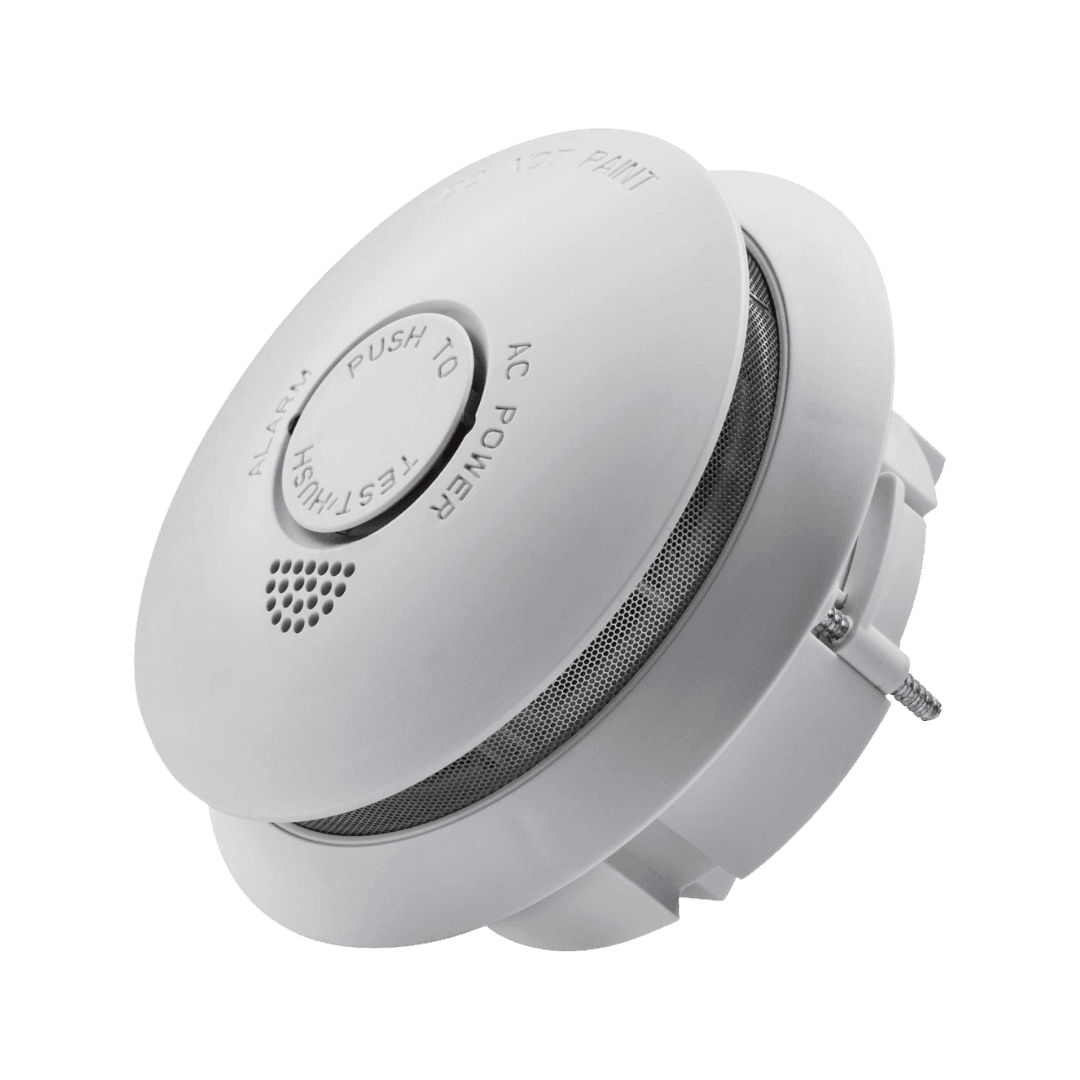
Photoelectric is the only type that complies. It uses a light chamber. Smoke drifts in, scatters the beam onto a sensor, and the alarm sounds. It picks up smouldering fires, the slow ones that start with an electrical fault or a heater near a curtain, well before a flame shows.
Ionisation alarms respond to fast flaming fires instead. They hold a small amount of radioactive material, Americium-241, and they're slower on the smouldering fires that hurt most people. They also nuisance-trip off cooking, which is how batteries end up in a drawer.
If the cover doesn't say photoelectric, assume it needs replacing. Glenn checks the type and the date on every alarm while he's there, and the old units go with him for disposal.