How Much Does a Switchboard Upgrade Cost in Toowoomba? (2026 Pricing Guide)
What Does a Switchboard Upgrade Actually Cost in Toowoomba?
The most common question I get from Toowoomba homeowners is a simple one: how much is this going to cost me? Nobody wants to ring an electrician and get hit with a number out of nowhere. So here's a straight answer, with the caveats that genuinely matter.
On the residential switchboard upgrades I've done around Toowoomba, the job has generally landed somewhere between $2,000 and $5,000, depending on the board, the main cable and whether there's asbestos backing behind it. That covers a typical home with 8 to 18 circuits: the new board, the breakers and RCDs, the install, the testing, and your Electrical Safety Certificate. A straightforward swap on a house with a sound main cable sits at the bottom of that. A bigger board, a main cable replacement and asbestos removal push it toward the top, and the odd job goes past it.
Anyone who gives you a firm number over the phone is guessing. The only way to know is for someone to open the board and look. But the factors below should let you budget with your eyes open before you make the call.
What You're Actually Paying For
A good quote isn't a number, it's a list of real work and real components. Here's what goes into one.
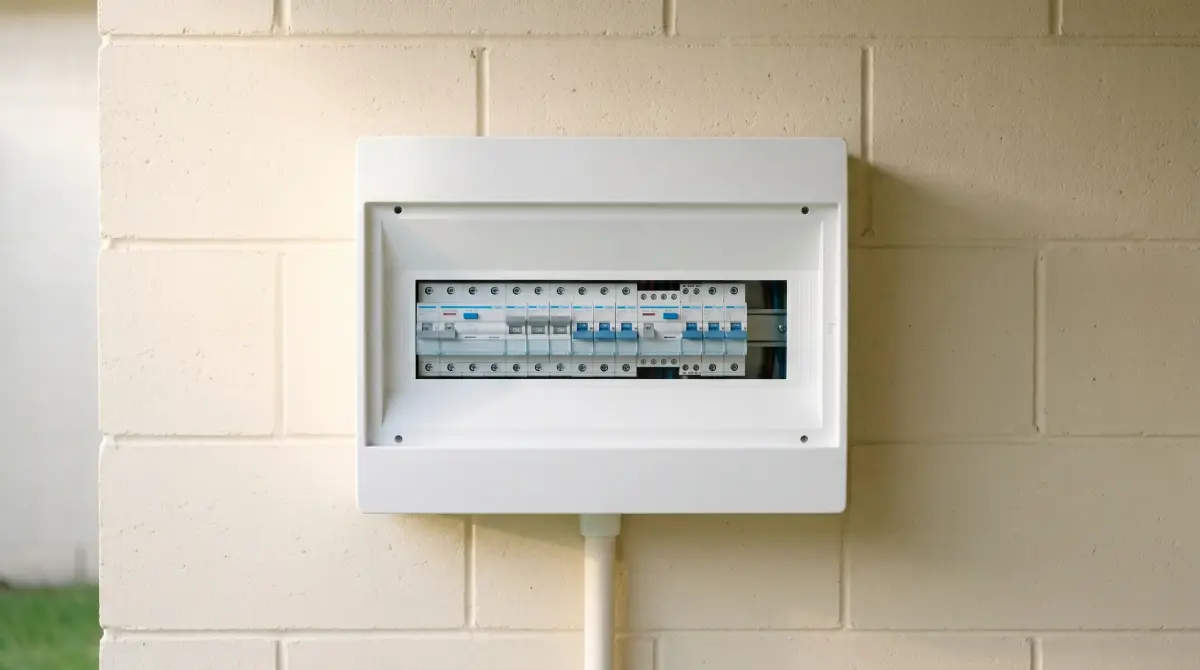
The enclosure itself comes from a manufacturer worth using, Hager or Clipsal in my case, sized for what the property draws now and what it's likely to draw later. Every existing circuit gets its own breaker, rated to the cable it's protecting. Unlike ceramic fuses, breakers reset instead of needing a fuse wire.
RCD protection is mandatory in Queensland on all final subcircuits under AS/NZS 3000. That's lights and air conditioning, not just power points. These devices cut power within 300 milliseconds of detecting a fault, which is the difference between a scare and a funeral. The job also includes a main isolation switch rated for the supply, removal and disposal of the old board, proper cable management and terminations, and every circuit labelled so the next person isn't guessing.
Testing isn't optional either. Insulation resistance, earth continuity, RCD trip times, and every circuit verified under load. You get an Electrical Safety Certificate at the end, which Queensland legislation requires and which you'll want for a sale, an insurer or a rental. Components carry their manufacturer's warranty, typically 5 to 10 years, and my workmanship is covered for life: if something's down to my work, I come back and fix it myself.
The Factors That Push It Up or Down
The main service cable is usually the biggest variable. That's the cable running from the street into your board. If it's undersized, deteriorated, or doesn't meet current standards, it has to be replaced. That typically adds $800 to $2,500 depending on distance, access, and whether the service is overhead or underground. Pre-1980s homes around here often have 10mm or 16mm cable that needs to come up to 25mm or better for modern loads.
Circuit count matters. More circuits means a bigger board, and each extra position adds roughly $80 to $150. A basic home might need 8 to 10. A larger modern place with ducted air conditioning, pool gear and multiple living areas might want 18 to 24.
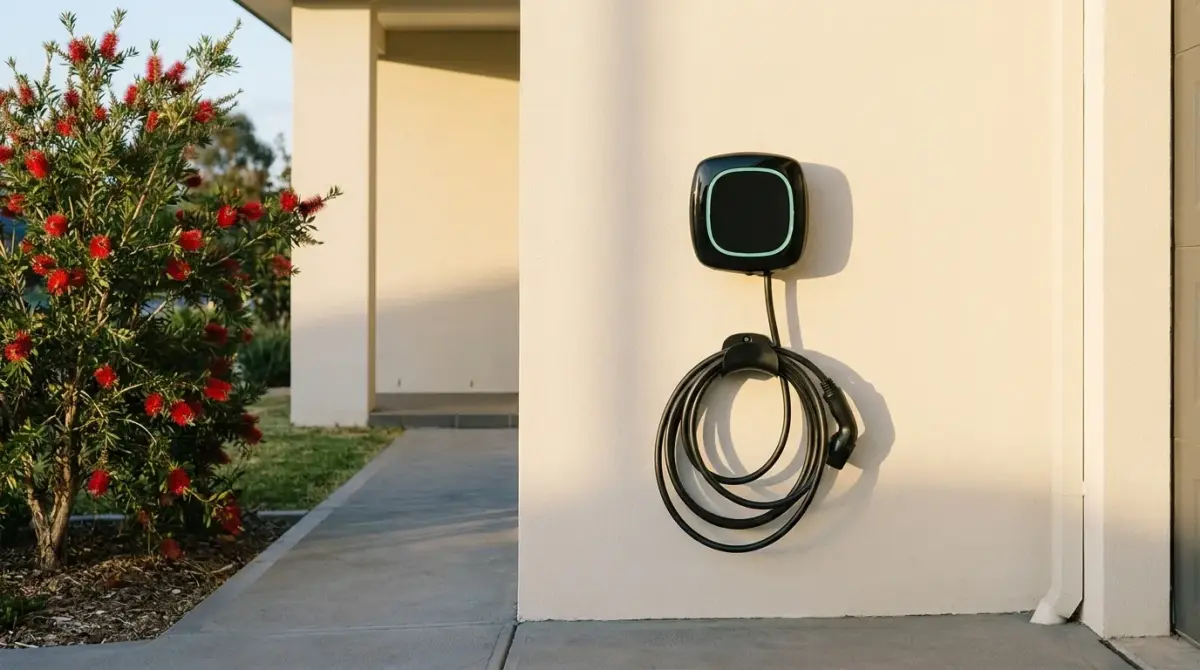
If you're adding an EV charger, ducted air conditioning or anything else that pulls hard, a dedicated circuit adds $200 to $500 each depending on the cable run.
Access plays a part. A board you can stand in front of costs less to replace than one wedged into a cupboard or up in a roof cavity, where awkward access can add $300 to $800.
Older Toowoomba homes, particularly pre-1970s, often need the earthing brought up to standard. That's usually part of the job, though driving earth electrodes into Toowoomba's rocky ground can occasionally add $200 to $500. Three-phase work carries a premium of $800 to $1,500 over the equivalent single-phase job. And if the old board has asbestos backing, handling and disposing of it under the Queensland rules adds $300 to $800. It's a step, not a showstopper.
Heritage homes, Queenslanders with difficult roof access, and places with odd wiring configurations typically run 20 to 30 per cent above a standard install, because they take longer and need more care.
If you want to know where yours sits, ring me on 0489 082 307 and I'll come and open it up.
Want this sorted properly?
Every job's different, so Glenn looks at it before he puts a number on it. The person who quotes is the person who turns up.
Three Jobs, Roughly How They Run
To make it concrete, here are three shapes of job I see across Toowoomba.
A basic replacement on a 1980s brick home in Wilsonton. The existing board works but has no RCDs and the owner wants it compliant. A 12-way Hager board goes in with RCD protection across the circuits and 10 breakers. The main cable is fine and the board is easy to get at. Four to five hours, with the power off for three or four of them. This is the bottom end of the range.
A standard upgrade on a 1970s Queenslander in East Toowoomba. Ceramic fuse board, and the owners are putting in air conditioning. A 16-way Clipsal board, the main cable up from 16mm to 25mm, RCD protection across 14 circuits, two new circuits for the air conditioning, and some earthing work. Six to seven hours, four to five of them with the power off. That sits mid-range.
A full job on a 1965 weatherboard in Newtown. Original ceramic fuse board, ducted air conditioning going in, and the owner wants an EV charger circuit ready. A 20-way Hager board with surge protection, the underground main cable replaced, RCD protection across 18 circuits, a dedicated circuit for the charger, two for the ducted system, and the whole earthing system brought up. A full day, and the top of the range or past it.
Things That Don't Affect the Price, Despite What People Think
A few assumptions worth clearing up.
Board brand doesn't meaningfully change the number. Hager, Clipsal and Schneider cost about the same. What you want to avoid is cheap imported gear, where the small saving up front buys you a problem later.
RCDs aren't an optional extra padding the quote. They're mandatory in Queensland, and a quote without them isn't compliant work.
Testing is the same story. It's required for the certificate. A cheaper quote that skips it isn't a cheaper quote, it's an incomplete job.
Budgeting and Planning
If your house went up before 1985, set aside an extra $1,000 to $1,500 in case the main cable needs replacing. Nobody can tell you for certain whether it does until the board is open, and it's better to have the money sitting there than to get a surprise midway.
Think about what's coming before you get quoted. A board sized now for future EV charging, solar or extra circuits costs far less than doing the board twice. Mention it at the assessment, even if the charger is a year off, and I'll leave spare ways for it.
And resist the cheapest quote on reflex. This is safety-critical work, and the cheapest number usually reflects a shortcut somewhere: testing, components, or the bits you can't see. A sensible mid-range quote from a licensed contractor is generally where the value is.
Questions Worth Asking Before You Commit
When you're comparing quotes, ask what's actually included. The board, all breakers and RCDs, the install, the testing and the certificate should all be on there, itemised, so there's nothing to argue about later.
Confirm RCD protection across all circuits is in the price. Ask what happens if the main cable turns out to need replacing, so you understand the process and the likely cost before anyone starts.
Ask how long the power will be off, so you can plan around the fridge, anyone working from home, and any medical equipment. Ask to see the electrician's QLD licence, because only a licensed contractor can legally do switchboard work here. And ask about the warranty: you want workmanship covered by the person doing the work, plus the manufacturer's warranty on the components.
Is It Worth It?
Yes, and not for sentimental reasons. A modern board with RCD protection prevents electric shock and cuts fire risk substantially. Insurers increasingly want to see one on older properties. A compliant system holds up in a pre-purchase inspection. And you end up with the capacity for EV charging, air conditioning and everything else modern life plugs in, without paying to do the board again in three years.
Getting a Real Number for Your Place
Every property is different, and the only way to price a switchboard upgrade properly is to look at it. I do free switchboard assessments across Toowoomba and the Darling Downs: I'll open up what's there, check the main cable, work out what the house actually draws and what you're planning to add, and give you an itemised number before anything starts. Happy to walk you through any of it.
I'm one person and I'm generally booked a couple of weeks out, so it's worth ringing early if you've got a timeline.
Call Glenn: 0489 082 307
QLD Electrical Licence 91375 | 10+ years' experience | 5-star Google rating