Need Outdoor Power? Safety Tips for Installing Weatherproof Power Points in Toowoomba
Getting Power Outside Safely
Power outdoors makes life a lot easier, whether you're running garden tools, patio lighting, a bar fridge for entertaining, or charging an EV in the carport. But electricity and the outdoor elements, especially Toowoomba's rain and humidity, are a combination that demands proper attention to safety.
I see it more often than you'd think: extension leads run through windows, indoor power boards sitting on covered patios, people having a go at wiring their own outdoor outlets. Every one of those shortcuts creates real danger. A standard indoor power point offers next to no protection against moisture, dust or UV. Using one outside isn't just risky, it's non-compliant with Australian Standards and it can void your home insurance.
Why Indoor Power Points Don't Belong Outside
The risks are straightforward. Water getting into an indoor-rated outlet can cause a short circuit or let electricity track where it shouldn't, which is a genuine shock hazard. Moisture and temperature swings corrode the internal connections, and that damage often isn't visible from the outside. Australian Standards prohibit indoor-rated fittings in outdoor environments. It isn't a grey area.
Weatherproof Ratings Explained
Outdoor power points need an appropriate Ingress Protection rating, the IP number you'll see on the packaging. The first digit is solid particle protection, the second is liquid protection. For most Toowoomba homes, IP54 or IP65 outlets are the right level.
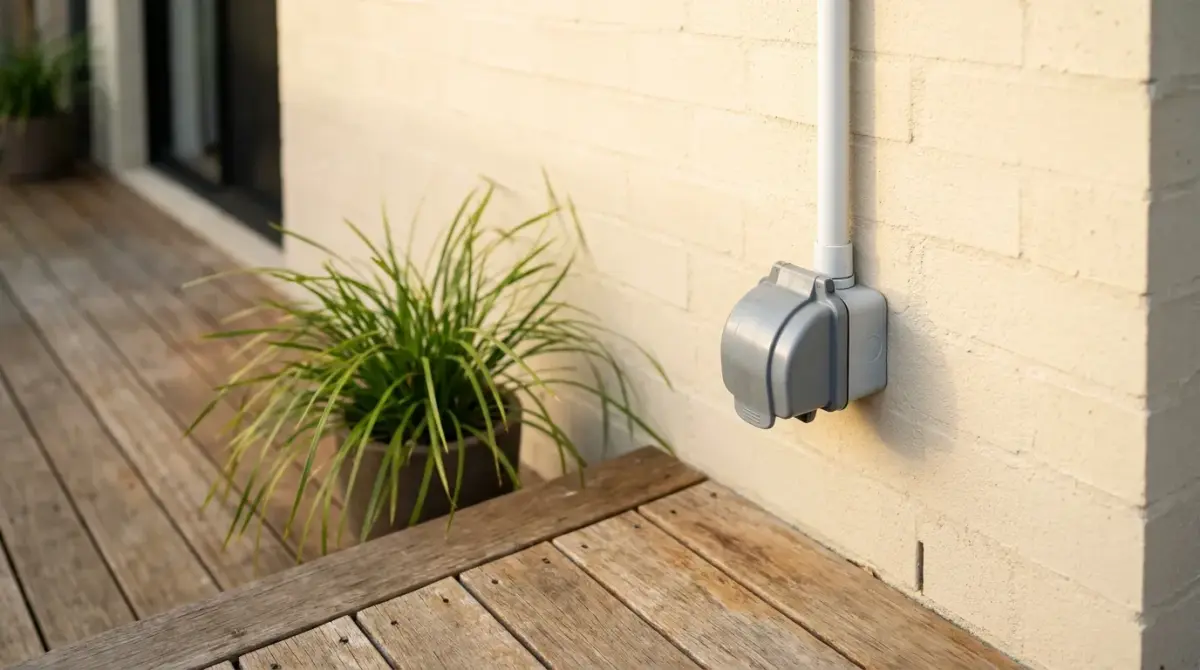
IP44 is the minimum for sheltered spots like under eaves or a covered patio, protecting against splashing water from any direction. IP54 is the standard for general outdoor use on an external wall, adding dust protection. IP65 suits exposed locations, poolside areas and garden sheds, with complete dust sealing and protection against water jets. IP66 is the heavy-duty option for extreme exposure or commercial washdown situations.
These outlets have heavy casings and hinged, spring-loaded covers that seal over the sockets when nothing's plugged in. I look at each location and what it's going to be used for before recommending a rating.
RCD Protection Is Mandatory
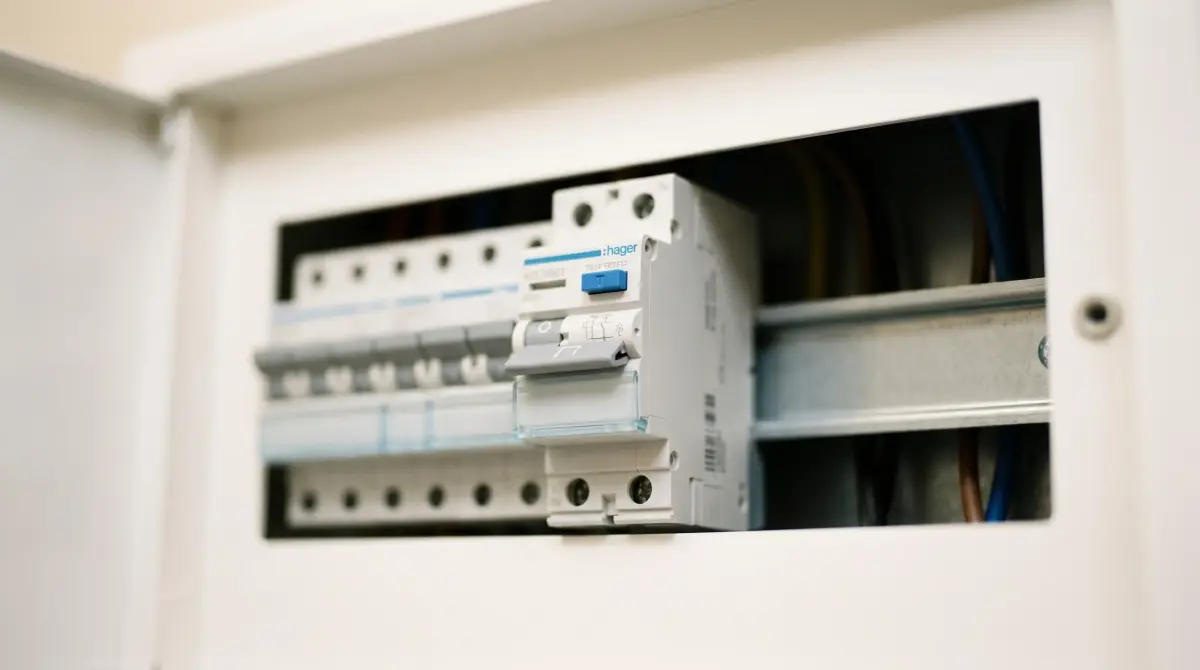
Because the shock risk is higher outdoors and in damp environments, every circuit supplying an outdoor power point has to be protected by a safety switch (RCD) under the Queensland Electrical Safety Act 2002. An RCD watches for earth leakage current and cuts the power if it detects electricity flowing somewhere it shouldn't, like through a person. Sensitivity has to be 30 milliamps maximum, and the trip time has to be within 300 milliseconds.
This isn't optional. It's the law, and it's genuinely life-saving. If your existing circuits aren't RCD protected, that has to be sorted as part of any outdoor power installation. More on that under Safety Switch Services.
Underground Cable Runs
A lot of outdoor power point jobs need cable run underground from the switchboard or the nearest power source. Queensland requirements set minimum burial depths of 500mm through general areas like lawns and garden beds, and 600mm under paths and driveways.
The cable runs inside UV-resistant PVC conduit, with brightly coloured electrical warning tape laid 150mm above it so anyone digging later gets a warning. Only TPS cable or equivalent rated for burial in conduit can be used, not standard domestic cable.
The trenching itself means excavating to depth, laying a 50mm sand bed, installing the conduit with the cables pulled through, covering with another 100mm of sand, laying the warning tape, then backfilling and making good the surface. It's methodical work, but done properly an underground run will sit there for decades without trouble.
Common Outdoor Power Applications
Entertainment areas are the most common request. Patios, decks and alfresco spaces need power for heaters and fans, audio, lighting, BBQ rotisseries, outdoor fridges and charging. Usually that's an IP54 or IP65 double GPO on a wall or post with RCD protection. More outlets beats relying on extension leads every time.
Garden sheds and workshops often want a dedicated circuit, particularly if you're running power tools, battery chargers and heating or cooling. A bigger workshop with heavy machinery may need three-phase power.
Pool and spa equipment needs a dedicated installation and strict compliance with the pool electrical safety zones in AS/NZS 3000 Section 6. Pool lighting has to be extra-low voltage via a transformer, and IP65 outlets are the minimum.
Outdoor kitchens and permanent BBQ areas need proper planning, usually with multiple dedicated circuits for the high-draw appliances: rangehoods, outdoor fridges, electric hotplates and dishwasher drawers.
EV charger installations in a carport or on an external garage wall go on their own circuit, sized for the charger and what your supply can carry, with RCD protection, an outdoor-rated charger and often a switchboard upgrade for capacity. See EV Charger Installation for the detail.
Want this sorted properly?
Every job's different, so Glenn looks at it before he puts a number on it. The person who quotes is the person who turns up.
Surge Protection for Outdoor Power
Toowoomba gets serious electrical storms, particularly October through April, and outdoor power points are more exposed to lightning-induced surge damage than indoor ones. A surge protection device fitted at the main switchboard protects every circuit including the outdoor ones. On jobs I've done, fitting one has generally landed between $300 and $750, depending on the board, whether there's spare space on it and which device suits the installation. If you've got expensive gear plugged in outside, it's worth asking about while I'm there.
Why DIY Outdoor Electrical Work Is Dangerous and Illegal
I'll be direct. Don't install an outdoor power point yourself. Electricity plus moisture is a bad combination, and it's illegal for anyone other than a licensed electrician to do this work in Queensland.
The risks are electrocution where water meets a live circuit, fire from undersized cable or poor connections, immediate invalidation of your insurance for any DIY electrical work, and prosecution under the Electrical Safety Act 2002. DIY installations also can't be issued an Electrical Safety Certificate, which becomes a problem when you sell the property or if it's a rental.
What the Install Actually Involves
I start by looking at the location and what you want to run off it, so the outlet gets the right IP rating. We talk through appliance loads, anything you might add later, and how exposed the spot is. Then it's outdoor-rated cable and conduit, underground runs at the correct depth with warning tape in place, RCD protection verified or installed on the circuit, and the outlet mounted at a sensible height, usually 450 to 500mm above ground, with every connection and entry point sealed against the weather.
Once it's mounted I run the full test sequence: insulation resistance, earth continuity, RCD trip time inside 300 milliseconds, polarity, and a load test with real appliances where that's practical. Every outdoor power point I install gets an Electrical Safety Certificate documenting compliance with Queensland requirements. If anything I've installed plays up and it's down to my work, I come back and fix it myself. Parts carry their manufacturer's warranty.
See also Power Point Installation.
What It Costs
These are Toowoomba jobs, and every property is different, so treat them as a guide rather than a price.
A single weatherproof power point on an external wall next to an existing internal circuit has generally landed between $280 and $550 installed, including the IP54 outlet, RCD protection, testing and certification. A double weatherproof outlet with a cable run of up to 5 metres has generally landed between $380 and $750. Jobs that need an underground run have generally landed between $650 and $2,000, depending on the distance and what the trench has to go through. Fitting out an entertainment area with two to four outlets on a dedicated circuit has generally landed between $1,200 and $3,000.
What moves the number is how far it is from the switchboard, whether cable has to go underground, whether anything needs drilling through concrete or brick, whether the switchboard needs work to take another circuit, how many outlets you want and what IP rating the spot calls for.
I don't quote off a description, because what's behind the wall decides half the job. Ring me on 0489 082 307 with what you're after and I'll come and look at it, then you'll have a real number.
Keeping Your Outdoor Power Points Safe Long-Term
Once they're in, outdoor power points want a bit of periodic attention. Monthly, press the test button on the switchboard to check the RCD, and have a look at the outlet covers for damage. Once a year, have the RCD tested properly, check the enclosures for signs of water getting in like corrosion or moisture, and check the cable entry points are still sealed.
After a storm, do a visual check for damage, test the RCD, and sniff for any burning smell or look for discolouration. If an outlet feels warm when nothing's plugged in, if you hear buzzing or crackling, if you see scorch marks or moisture inside the enclosure, or if the RCD trips whenever the outdoor circuit is used, stop using it and get it looked at. Those are signs of a problem that needs sorting before it turns into something worse.
I work in Toowoomba and around the Darling Downs. If you want power outside, or you've got an outdoor outlet that's worrying you, ring me on 0489 082 307 and I'll come and look at it. I'm generally booked a couple of weeks ahead, so ring early if you've got a date in mind. If you're reading this from somewhere else in Australia, the standards above still apply, but you'll want a licensed electrician local to you.