Outdoor Lighting Ideas for Toowoomba Homes: Design, Safety & Installation Guide
More Than Just a Porch Light
Well-designed outdoor lighting transforms a Toowoomba property. It extends your living space into the evening, makes your home safer to navigate after dark, deters intruders, and highlights the garden features you've spent years cultivating. Yet most homeowners settle for a basic sensor light by the front door and call it done.
Having installed outdoor lighting across hundreds of local properties, from heritage Queenslanders in East Toowoomba to modern entertainer's homes in Highfields, I've seen firsthand the difference that thoughtful lighting design makes. The good news is that LED technology has made quality outdoor lighting more affordable and energy efficient than ever.
Queensland Weather and What It Means for Your Lighting
Toowoomba's climate throws a few challenges at outdoor electrical installations. Summer storms bring severe lightning that demands surge protection on outdoor circuits. Heavy rain tests the weatherproofing of every fitting and connection. Our intense UV exposure deteriorates plastic fittings and cable insulation faster than you'd see down south, so quality UV-rated materials aren't optional, they're essential.
Temperature cycling between hot summer days and cool winter mornings expands and contracts connections, which is why quality fittings with secure terminations matter. And humidity means moisture ingress is always trying to corrode electrical connections. All outdoor lighting needs to meet minimum IP65 weatherproofing standards for exposed locations.
On the compliance side, Australian Standard AS/NZS 3000 is clear about outdoor electrical requirements. All outdoor power and lighting must have RCD (safety switch) protection. Fittings need appropriate IP ratings for their location. Underground cable must be buried at minimum 500mm depth in conduit, and all connections must occur within approved weatherproof junction boxes. Only licensed electricians can legally perform outdoor electrical installation in Queensland.
Security and Safety Lighting
Security lighting is usually where people start, and for good reason. Well-positioned motion sensor floodlights at building corners and entry points surprise intruders whilst avoiding the light pollution of permanently lit security lights.
I recommend installing multiple lower-wattage LED floodlights of 20 to 30 watts each rather than a single harsh high-wattage unit. You get better coverage, more natural-looking illumination, and lower running costs. Position them at the front entrance, rear entry and backyard gates, garage and carport entries, side passages, and any shed or workshop entrances. Properties backing onto parkland, creeks, or rural areas around Toowoomba benefit from additional sensors positioned to detect approaching movement early.
Entertainment and Alfresco Area Lighting
This is where outdoor lighting gets genuinely exciting. The trick to a great entertainment area is layered lighting, combining multiple light sources at different heights and intensities to create a space that's functional for cooking and serving but atmospheric enough for relaxed evening conversations.
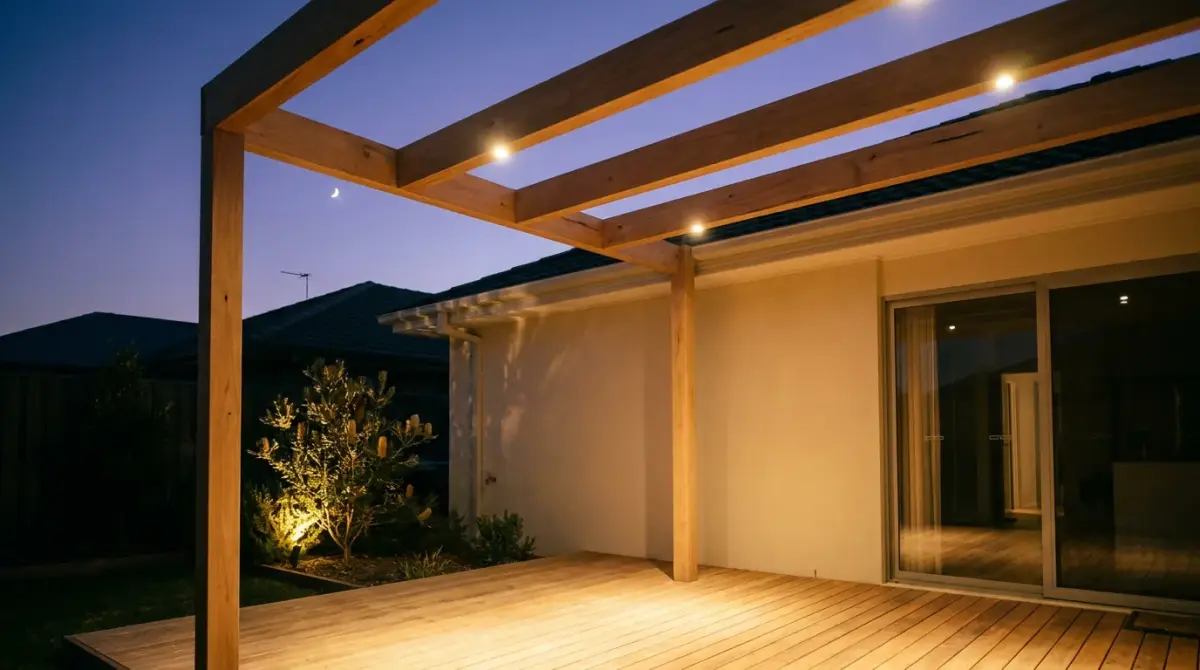
Overhead, you want ceiling-mounted downlights under alfresco roofs for your main illumination, possibly a pendant light over the dining table as a feature, and string lights or festoon lighting to create ambient warmth. For task lighting, LED strip lighting under benches and BBQ prep areas works brilliantly, with directional spotlights for cooking zones. Then add ambient touches like wall-mounted uplights on architectural features and subtle pathway lighting leading to the entertainment area.
Installing dimmers is one of the best investments you can make in an alfresco space. Bright functional light for food prep transitions to subtle mood lighting for after-dinner drinks with a single adjustment. Given that Toowoomba alfresco areas see year-round use, all fittings need to be rated IP65 or higher for reliable performance across every season.
Pathway, Driveway, and Garden Lighting
Pathway lighting is as much about safety as it is about aesthetics. Bollard lights, those sturdy posts 400 to 800mm high, provide excellent ground-level illumination along pathways, driveways, and garden beds. In-ground uplights sit flush with the pathway surface and create dramatic effects by highlighting trees, walls, or architectural features above. Step lights installed in risers or adjacent walls are genuinely important for any outdoor stairway or level change, preventing trips and falls while adding architectural interest.
A word on solar pathway lights versus mains-powered. Solar lights avoid wiring costs, but they provide inconsistent illumination and typically last 2 to 3 years before the batteries fail. Mains-powered LED pathway lighting installed by a licensed electrician costs more up front but gives you reliable, bright light for 15 to 20 years. Position pathway lights every 2 to 3 metres along primary paths, with closer spacing of 1.5 to 2 metres on steps or curved sections.
Garden feature lighting is where you can really transform your outdoor space. Uplighting positioned at the base of mature trees, whether eucalypts, bottle trees, or established ornamentals, creates stunning focal points after dark. Small LED spotlights of just 3 to 5 watts tucked into garden beds highlight feature plants, sculptures, or architectural elements whilst creating depth and visual interest. Toowoomba's drought-tolerant gardens with native plants, ornamental grasses, and feature rocks actually take accent lighting really well, because the textures and forms look dramatic under directional light.
Want this sorted properly?
Every job's different, so Glenn looks at it before he puts a number on it. The person who quotes is the person who turns up.
Why LED is Now the Standard
LED outdoor lighting consumes 80 to 90 per cent less power than equivalent halogen or incandescent options. A typical 50-watt halogen spotlight replaced with a 6-watt LED delivers identical illumination at a fraction of the running cost. Quality LED fittings last 15 to 20 years, or 50,000-plus hours, compared to 1,000 to 2,000 hours for halogen. They generate minimal heat, eliminating fire risks near timber, plants, or insulation. And they illuminate instantly, which is critical for motion sensor security applications.
The running cost difference is dramatic. A traditional setup of ten 50-watt halogen spotlights running four hours a night draws 730 kilowatt hours a year. Swap those for ten 6-watt LEDs on the same four hours a night and the draw falls to 87.6 kilowatt hours.
For colour temperature, warm white at 2700 to 3000K suits entertainment areas and architectural features, creating that relaxed, inviting glow. Neutral white at 4000K is versatile for pathways and general illumination. Cool white at 5000K and above works best for security lighting and work areas where visibility is the priority.
Smart Controls and Automation
Modern outdoor lighting control has moved well beyond basic switches. Timer controls handle garden and security lighting on preset schedules. Photocell sensors automatically activate lights at sunset and switch them off at sunrise, which suits perimeter security. Motion sensors reduce running costs by activating lights only when needed. Smart WiFi controls let you operate everything from your phone, handy for adjusting lighting while entertaining or checking security lights while you're away.
The real value comes from zoning. Separating your outdoor lighting into independent zones, front security, entertainment area, garden features, pathways, rear yard, means you only run what you need at any given time. That keeps running costs down while giving you full flexibility.
Safety, Compliance, and Underground Cabling
Outdoor lighting installation involves more than screwing a fitting to a wall. Underground cable runs need to be buried at minimum 500mm depth in heavy-duty orange electrical conduit, with greater depth of 600mm under driveways and high-traffic areas. Only approved underground-rated cable can be buried, and all connections must occur within IP65-rated weatherproof junction boxes. Warning tape laid 150mm above the cable alerts anyone who might dig in the area later.
RCD protection is mandatory on all outdoor electrical circuits under Queensland regulations. Outdoor lighting should connect to dedicated RCD-protected circuits separate from your indoor lighting, so an outdoor fault doesn't plunge your house into darkness.
Quality fittings matter enormously. Cheap imported outdoor lights fail rapidly in Queensland's harsh climate, with corroded connections, failed LEDs, and cracked housings creating ongoing replacement costs and safety risks. Investing in quality fittings from manufacturers like Clipsal, HPM, or Brilliant Lighting means higher initial cost but 15 to 20 year lifespans.
What Outdoor Lighting Typically Costs
A basic security and safety package for a standard four-bedroom Toowoomba home, four motion sensor LED floodlights at the corners and entries plus two porch downlights, has generally landed between $700 and $1,400 on the jobs I've done, depending on the cable runs, the wall and roof access, and how far the fittings sit from the switchboard.
A bigger entertainment and garden package for a modern home with an alfresco and established gardens, say six alfresco downlights on a dimmer, eight garden spotlights, ten pathway bollards, feature pendants and smart controls, has generally run $4,500 to $7,500, depending on the fittings you pick, how much trenching is involved, and whether the alfresco ceiling is already wired.
Whole-property designs for larger blocks or heritage homes, with a full security perimeter, extensive entertainment and garden lighting, facade lighting and smart controls, have generally gone $8,000 to $16,000 and occasionally past it, depending on the size of the block, the trenching, and how much of the existing wiring can be reused.
Those are the shape of it rather than a quote, because every property throws up something different. Ring me on 0489 082 307 and once I've walked the place I'll give you a real number.
If budget is a consideration, staged installation works well. Start with security and safety essentials, add entertainment area lighting next, then incorporate garden features as budget allows. Each stage adds value and functionality.
Getting Started with Your Outdoor Lighting
The best outdoor lighting starts with a clear picture of what you want to achieve. Think about security and safety needs, how you use your outdoor entertainment areas, which garden features deserve highlighting, pathway and access requirements, and any architectural elements worth showcasing.
From there, outdoor lighting installation by a licensed electrician means everything meets AS/NZS 3000 standards, uses appropriate weatherproof fittings, includes proper RCD protection, and comes with an Electrical Safety Certificate on completion.
If you're thinking about upgrading your outdoor lighting, give me a call on 0489 082 307 and we can talk through what would work best for your property.