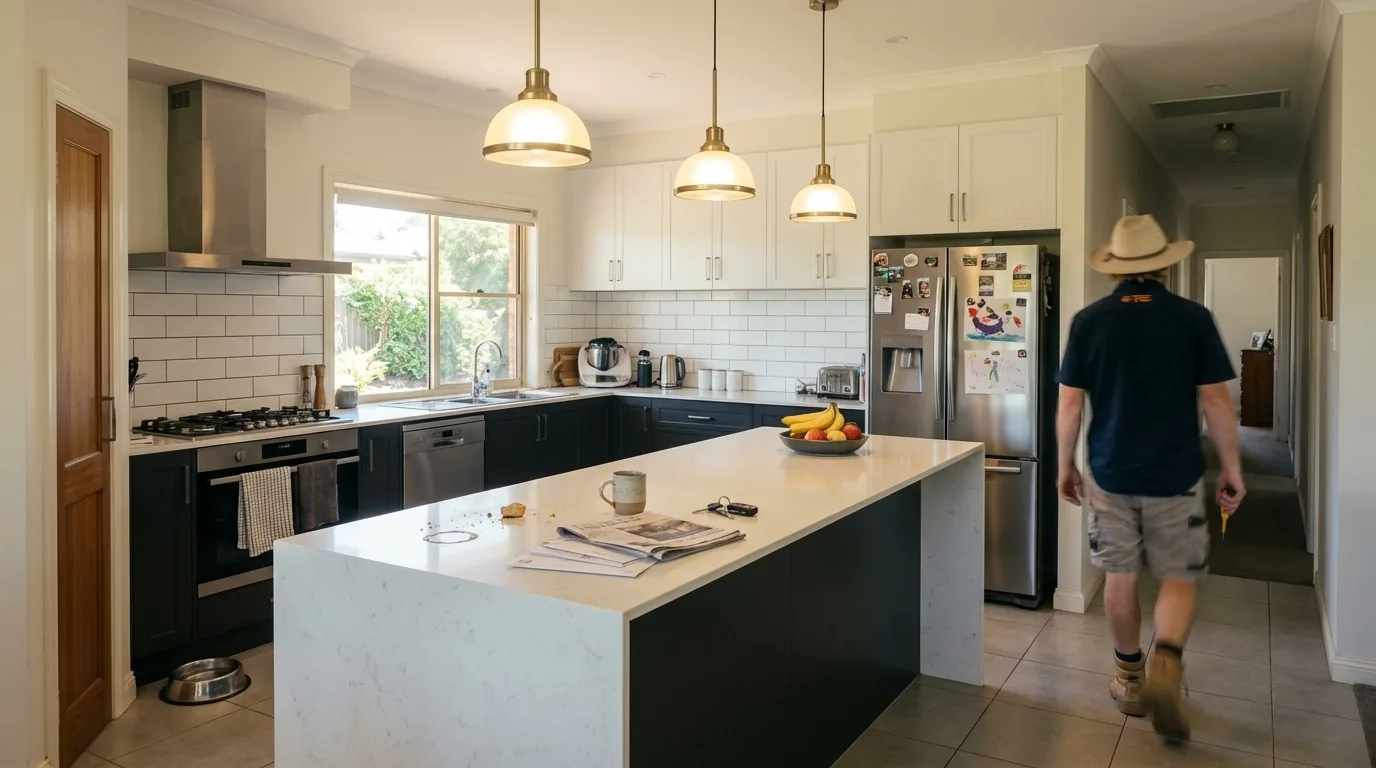

Kitchen Power Points: Kitchen additional outlets should be positioned along benchtops providing convenient access for appliances without gaps requiring stretched cords. Typical spacing: outlets every 600-900mm along work surfaces, additional outlets near major appliance locations (kettle, toaster, coffee machine areas), and dedicated outlets for specific equipment (microwaves, electric kettles). Professional planning ensures adequate coverage without excessive installations.
Bedroom Power Points: Bedrooms require multiple access points—bedside outlets for lamps, phones, tablets, CPAP machines—yet many older bedrooms have minimal coverage. Additional bedroom power points provide convenient bedside access, adequate lighting outlets, and power for modern bedroom electronics without overloading limited existing outlets.
Entertainment Areas: Modern entertainment systems—televisions, sound systems, gaming consoles, streaming devices, media players—require numerous power outlets. Additional power points dedicated to entertainment equipment eliminate power board reliance whilst providing proper power distribution for expensive electronics.
Home Office: Home offices require power for multiple computers, monitors, printers, and equipment. Additional outlets provide adequate desk power, reduce power board reliance, and support modern office equipment safely.