Electric Hot Water Not Hot Enough? Troubleshooting Electrical Issues in Toowoomba
When Your Morning Shower Goes Cold
Few things ruin a morning faster than stepping into the shower expecting hot water and getting a lukewarm surprise. If you've got an electric storage hot water system in your Toowoomba home and it's suddenly not doing its job, the instinct is usually to call a plumber. But more often than you'd expect, the problem is electrical rather than plumbing-related.
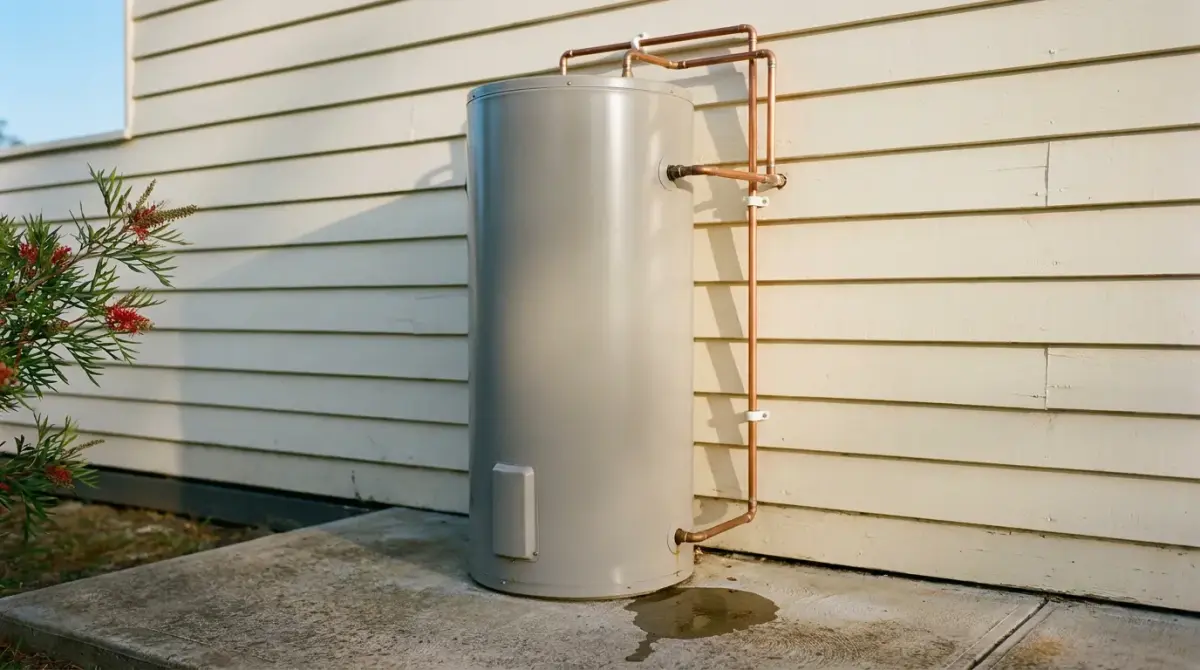
The heating element and thermostat are the heart of your electric hot water system, and both are electrical components. A tripped circuit breaker, a faulty relay, or a failed element can leave you without hot water just as effectively as a plumbing fault, and they're issues that need a licensed electrician rather than a plumber to sort out.
The Usual Electrical Suspects
The thermostat is the brain of the operation. It senses the water temperature through a capillary tube immersed in the tank and tells the heating element when to switch on and off, typically maintaining water at 60 to 65 degrees for the right balance between energy efficiency and legionella prevention. When a thermostat fails, it can go a couple of ways. It might cut power to the element and stay off, giving you cold water. Or it might fail in the on position, heating continuously until the safety cutout trips, which also results in cold water once the tank cools down.
Thermostat problems can develop gradually. Calibration drift over time means the thermostat starts sensing temperature incorrectly, cutting power at 50 degrees instead of 60. That explains why hot water quality sometimes declines slowly rather than failing overnight. The internal switch contacts can also weld in the open or closed position, or the capillary sensing tube can develop leaks, causing erratic behaviour or complete failure.
The heating element is the workhorse, the component submerged in the tank that converts electricity directly into heat. Elements burn out over time, and in Toowoomba's moderately hard water, mineral scale builds up on the element surface and reduces heating efficiency even before outright failure. Larger tanks often have two elements, an upper and a lower. If one fails in a dual-element system, you'll still get some hot water but it will run out much faster than usual.
A tripped circuit breaker or blown fuse is the simplest possibility. Check your switchboard first. If the hot water circuit has tripped, you can try one reset. If it trips again immediately, stop there and call a licensed electrician. Repeatedly resetting a tripping breaker can worsen the underlying fault and create fire or shock hazards.
Off-Peak Relays and Timer Issues
Many Toowoomba hot water systems are connected to controlled off-peak electricity tariffs. Queensland's Tariff 31 (Super Economy) provides a minimum of 8 hours of power daily (overnight only), while Tariff 33 (Economy) provides at least 18 hours. If the relay controlling your off-peak supply develops a fault, your system might not get enough heating time overnight, leaving you short of hot water during the day.
Systems running on time clocks, often used with solar PV to heat water during peak generation hours, have their own quirks. If the timer isn't set for long enough, the element simply doesn't have time to heat the full tank. A 315-litre system typically needs 4 to 6 hours of heating. Setting the timer for only 2 hours produces predictably insufficient hot water. Failed backup batteries in the timer can also reset programming to defaults, quietly eliminating your heating schedule without any obvious sign of a problem.
Dual-Element Systems and How They Operate
If your home has a dual-element hot water system, understanding how it works helps pin down what's gone wrong.
In recovery mode, after heavy use like multiple showers in succession, both upper and lower elements operate simultaneously to quickly restore hot water. This typically happens on peak electricity tariffs. In normal maintenance mode, only the lower element operates on off-peak power overnight, which is the most cost-effective daily operation.
When the upper element fails, the system can still heat water via the lower element but recovery is slow. You'll get adequate hot water for light use but it depletes rapidly during heavy use. When the lower element fails, off-peak heating doesn't work at all, though peak recovery mode may still function with the upper element. The symptom is typically insufficient hot water first thing in the morning after overnight off-peak heating.
When Circuit Breakers Keep Tripping
A hot water circuit that keeps tripping indicates a serious fault that needs professional attention. The most common cause is an element earth fault, where deteriorated insulation on the element allows current to leak into the water and to earth. This is a genuine safety hazard because electricity flowing through water creates shock risks.
Short circuits from wiring faults or internal element failures cause immediate high current draw that trips breakers or blows fuses instantly. Overloaded circuits, where the breaker is undersized for the element wattage, create sustained overload tripping. And loose terminal connections create resistance heating and potentially arc faults, producing intermittent or random tripping patterns.
I use systematic diagnosis to track down the cause: visual inspection for damage and overheating signs, continuity testing to identify short or open circuits, insulation resistance testing with a megger to detect earth faults, current measurement against expected values, and isolation testing to disconnect components individually until the fault source is identified.
Want this sorted properly?
Glenn quotes most Toowoomba jobs within 48 hours, and the person who quotes is the person who turns up.
Is It Electrical or Plumbing?
Knowing which tradesperson to call saves you time and money. If you have no hot water at any tap despite the system having power, that points to a heating element or thermostat problem. Consistently lukewarm water throughout the house indicates thermostat or element issues affecting heating quality. Running out of hot water after only one or two short uses suggests element failure or thermostat problems preventing adequate heating. And a circuit breaker tripping on the hot water circuit is definitively an electrical fault.
On the other hand, if you have no water flow at all from hot taps, that's a plumbing issue with supply pipes or shut-off valves. Hot water at the tank but cold at the taps points to a faulty tempering valve, which is also a plumbing repair. Visible water leaks and reduced hot water pressure are plumbing territory too.
A quick test: carefully lift the temperature-pressure relief valve lever briefly. If hot water flows from the overflow pipe, the tank contains hot water and the problem is in delivery, meaning plumbing. If no hot water flows, the heating isn't working, meaning electrical. Use caution though, that relief valve water can be scalding.
Corrosion and Terminal Problems
Corrosion is one of the most common long-term issues I see affecting hot water system electrical connections in Toowoomba. The brass or copper terminals connecting power cables to the thermostat and element corrode from moisture exposure, producing green or white deposits that create poor connections, increase resistance, generate heat, and can ultimately cause arcing and fire risk.
Toowoomba's moderately hard water accelerates element corrosion through scale buildup. Minor earth faults or poor earthing create electrolytic corrosion. Poorly sealed terminal compartments let humidity reach connections. And dissimilar metals in contact, like copper wiring on steel terminals, create galvanic corrosion in moist environments.
Prevention is straightforward. Terminal compartment covers need properly sealed gaskets. Dielectric grease on terminals prevents moisture contact. And regular inspection by a licensed electrician catches developing corrosion before it becomes a complete failure.
Element Replacement Costs
Element replacement is one of the most common hot water repairs I do. For small systems of 125 to 160 litres with 2400-watt elements, the total including a quality element and professional installation sits around $200. Medium systems of 250 to 315 litres with 3600-watt elements run $250 to $400. Large systems over 400 litres with 4800-watt elements are $300 to $450. Dual-element replacement for both elements is typically $350 to $450.
Element replacement provides excellent value on systems under 10 years old in reasonable condition, restoring 3 to 5 years of additional system life. For systems over 12 years old with multiple problems, complete system replacement from around $2,000 with a 10 to 12 year expected lifespan often makes more economic sense.
What You Can Safely Check Yourself
There are a few things you can do before calling anyone. Check your switchboard for a tripped hot water circuit breaker and try one reset. Listen for the element's subtle humming sound during scheduled heating times. For systems with time clocks, verify the display shows the correct time and that heating schedules are programmed. And carefully test the relief valve to check whether the tank actually contains hot water.
Everything beyond those basic checks needs a licensed electrician. Element testing, thermostat testing and replacement, any wiring repairs, off-peak relay diagnosis, and circuit breaker fault finding all involve working on live electrical components in wet environments. Queensland's Electrical Safety Act 2002 prohibits unlicensed persons from performing any fixed electrical work, and for good reason. Water and electricity combinations create potentially fatal shock hazards if work isn't done properly by qualified persons. DIY electrical work also voids insurance policies and component warranties.
Getting Your Hot Water Sorted
If your electric hot water system is playing up, the first step is working out whether the problem is electrical or plumbing. If the signs point to electrical, give me a call on 0489 082 307. I carry the specialised testing equipment needed to diagnose thermostat faults, element failures, relay problems, and wiring issues quickly and accurately, so we can get your hot water back up and running.