Essential Electrical Maintenance Checklist for Toowoomba Homeowners
Most People Only Think About Electrics When Something Breaks
That is just human nature. Your electrical system sits behind the walls doing its job quietly, and you do not give it a second thought until a safety switch trips, a power point stops working, or the lights start flickering. By then, you are usually dealing with a fault that could have been caught much earlier.
Regular electrical maintenance prevents dangerous faults, extends the life of your system, and keeps your Toowoomba home compliant with Queensland's electrical safety legislation. Industry research suggests the majority of electrical faults are preventable with basic maintenance. That is a staggering number, and most of the tasks involved take very little time.
I have put together a practical maintenance schedule based on what I see going wrong in Toowoomba homes. Some tasks you can handle yourself in a few minutes. Others need a licensed electrician. The key is making them routine rather than reactive.
Why Toowoomba Homes Face Specific Challenges
Queensland's climate puts particular stress on electrical systems, and Toowoomba has its own set of conditions that make regular checks especially important.
Summer heat pushes air conditioning systems hard, which strains electrical circuits and reveals loose connections that overheat under load. Storm season brings lightning strikes, power surges, and water ingress that test your surge protection and earthing systems. The extreme temperature swings between seasons cause electrical connections to expand and contract over time, gradually loosening terminations and creating high-resistance joints that overheat.
Then there is the housing stock. Many homes in East Toowoomba, Newtown, Middle Ridge, and Rangeville are heritage Queenslanders and post-war properties that still have original electrical installations. These systems need proactive attention because age-related deterioration does not announce itself until something fails.
Monthly Tasks That Take Ten Minutes
Test Your Safety Switches
Safety switches, or RCDs, are the devices in your switchboard that cut the power within 300 milliseconds if they detect a fault that could cause electric shock. They save lives, but they can fail without any obvious warning sign. Monthly testing takes about a minute.
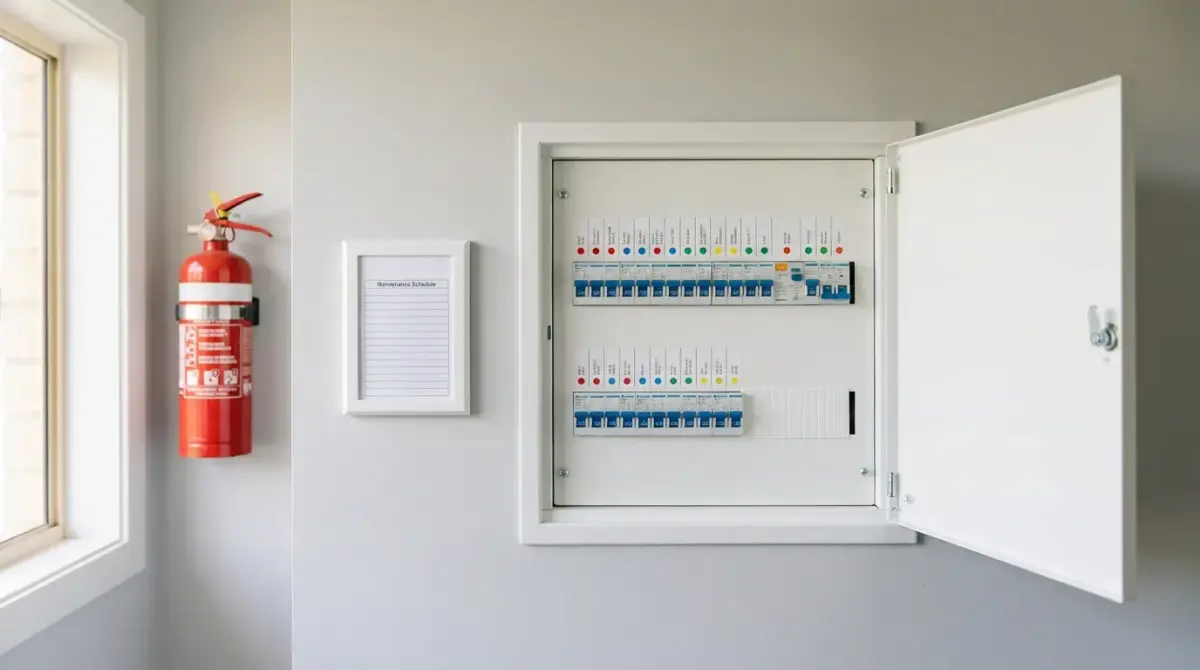
Locate your switchboard and find the safety switch, usually marked "RCD" or "SAFETY SWITCH." Press the test button marked "T." The switch should trip immediately and click to the off position. If it does not trip instantly, the RCD has failed and you need a licensed electrician to replace it. Once you have confirmed it trips, reset it by pushing it firmly back to the on position.
The Electrical Safety Office Queensland recommends monthly safety switch testing, and for rental properties it falls under the landlord's maintenance obligations.
"I'd never tested our safety switches until reading Glenn's advice. Good thing I did, one didn't trip when I pressed the test button. Glenn replaced it the next day and explained it had been faulty for months without us knowing. That safety switch protects our kids' bedrooms." — Rebecca S., Wilsonton
Check Your Power Points
While you are at it, do a quick visual scan of the power points you use most often. Look for discolouration or burn marks around the outlet, which indicate overheating and dangerous faults. Check for cracks or damage to the outlet covers. If a power point moves or wobbles when you plug something in, the mounting is loose and needs professional attention. And if a power point feels warm to the touch when nothing particularly demanding is plugged in, that suggests a loose connection or overloaded circuit.
Stop using any power point showing these signs and get it inspected. Overheating power points cause house fires.
Listen for Unusual Sounds
Buzzing or humming from your switchboard, outlets, or light switches usually indicates loose connections, failing components, or overloaded circuits. These are worth investigating sooner rather than later. Crackling or sizzling sounds are more serious. If you hear those, switch off power at the switchboard and call an electrician straight away.
Quarterly Checks
Inspect Light Fixtures
Spend a few minutes checking your light fittings each quarter. Flickering that is not caused by a loose bulb can indicate wiring issues. If lights dim noticeably when an appliance kicks in, like the air conditioning compressor starting up, that suggests the circuit is overloaded and may need splitting.
Excessive heat from downlights or ceiling fixtures is a common concern in Toowoomba homes, particularly older properties with halogen downlights. Those halogens generate extreme heat and create genuine fire risks in insulated roof spaces. LED downlight upgrades eliminate the overheating problem and reduce energy costs by around 80%.
Also check outdoor light fittings for corrosion, damaged insulation, or moisture getting inside. Toowoomba's temperature extremes and weather deteriorate outdoor electrical faster than indoor installations.
Have a Look at the Switchboard
You do not need to open it, and you should not remove the cover yourself, because internal components carry lethal voltage even with circuit breakers off. But a visual check of the closed switchboard door is worthwhile. Look for rust or corrosion, burn marks or discolouration around circuit breakers, unusual warmth radiating from the enclosure, and any buzzing sounds. If circuit breakers are tripping repeatedly after being reset, that needs professional investigation.
Think About Your Electrical Capacity
This is less about inspecting and more about noticing patterns. Are circuit breakers tripping frequently? Do the lights dim when the air conditioning starts? Are you relying on extension leads and power boards throughout the house? Can you not run the kettle and the toaster at the same time without something tripping?
These symptoms point to inadequate electrical capacity. A switchboard upgrade with additional circuits addresses the problem properly rather than just managing around it.
Want this sorted properly?
Glenn quotes most Toowoomba jobs within 48 hours, and the person who quotes is the person who turns up.
Annual Professional Inspection
DIY checks catch obvious issues, but a professional electrical inspection detects hidden faults using specialist test equipment that no amount of visual inspection can replicate.
A comprehensive inspection includes insulation resistance testing to identify deteriorating cable insulation before faults develop, earth continuity testing to verify your protective earthing systems work correctly, RCD trip time testing using calibrated equipment to measure safety switch response times, thermal imaging to reveal overheating connections that are invisible to the eye, and circuit load analysis to identify overloaded circuits and capacity issues.
The physical inspection covers the internals of the switchboard, checking terminations, busbar connections, and component condition. Power points and light switches get inspected for loose connections and wear. The main earthing and bonding systems are verified against AS/NZS 3000 standards. Outdoor electrical weatherproofing is assessed, and smoke alarm compliance and interconnection are tested.
When Professional Inspections Are Especially Important
Before purchasing a property, a pre-purchase electrical inspection identifies expensive problems before settlement. Queensland landlords should arrange professional inspections annually to maintain compliance and tenant safety. Some insurance policies require inspections for properties over 25 years old. After major storms, lightning strikes and power surges can damage electrical systems invisibly, so post-storm inspections catch surge damage before equipment fails. Heritage homes built before 1990 should have inspections every two to three years.
G-TEC Electrical provides comprehensive electrical safety inspections throughout Toowoomba and the Darling Downs.
Heritage Home Electrical Maintenance
Queenslanders and character homes need some extra attention beyond the standard checklist. Many heritage homes in East Toowoomba, Newtown, and Rangeville retain original wiring systems dating to the 1920s through 1960s. Fabric-covered wiring, early rubber-insulated cables, and aluminium wiring all deteriorate dangerously with age.
Annual inspections should assess the condition of insulation on visible wiring, connections at light fittings and power points, evidence of rodent damage in roof spaces (rats love chewing through cable insulation), and the adequacy of earthing systems. Ceiling cavity inspections are particularly important because Queensland's extreme roof space temperatures accelerate cable insulation deterioration.
Original ceramic fuse switchboards lack every modern safety feature. No RCDs, inadequate capacity, obsolete fuses. A switchboard upgrade is the single most important electrical safety improvement for any heritage Toowoomba home.
For more detail, read our guide on old wiring replacement in Toowoomba homes.
Smoke Alarm Maintenance
Queensland's smoke alarm legislation requires ongoing maintenance, not just initial installation. Test each smoke alarm monthly by pressing the test button and verifying that all interconnected alarms sound simultaneously. If any alarm does not activate or the interconnection fails, arrange professional servicing.
Every six months, vacuum the smoke alarm vents with a soft brush attachment to remove dust and debris that impairs smoke detection. Annually, a licensed electrician should verify alarm age (maximum 10-year lifespan from manufacture date), confirm photoelectric type (ionisation alarms are no longer compliant in Queensland), test interconnection throughout the dwelling, check placement against current legislative requirements, and test battery backup on hardwired alarms.
For rental properties, annual professional smoke alarm testing is mandatory, with documentation to demonstrate compliance. G-TEC Electrical provides smoke alarm compliance services across Toowoomba.
Storm Season Preparation
Toowoomba's severe storm season, running roughly from October through March, requires specific electrical preparation. Before storm season starts, test your surge protectors using their built-in indicators. Consider whole-house surge protection installed at the switchboard for comprehensive equipment protection. Have your earthing system professionally tested, because a good earth is your main defence against lightning damage.
Check outdoor power point weatherproof covers to make sure they close completely and the rubber seals are intact. Inspect outdoor lighting for corrosion or moisture entry points. Keep a torch with fresh batteries near the switchboard and save your electrician's emergency number (0489 082 307) in your phone.
After severe storms, do a quick check before resuming normal electrical use. Look for obvious damage, check for burning smells, listen for buzzing or crackling, and test your safety switches. If you suspect a lightning strike anywhere near the property, arrange a professional inspection. Lightning causes internal damage that you cannot see, and equipment can fail dangerously days or weeks later.
When to Call an Electrician Straight Away
Some situations require immediate professional response. A burning smell from outlets, switches, or the switchboard is an emergency. So are sparks from any electrical fitting, electric shock from an appliance, smoke from electrical equipment, hot or discoloured power points, exposed wiring, a safety switch that will not reset, circuit breakers that trip immediately when reset, or water contact with electrical systems. Do not wait on any of these.
Urgent issues that should be addressed same-day include power loss to part of the house, lights flickering throughout the house, a safety switch test button that does not trip the RCD, buzzing from the switchboard, or multiple circuit breakers tripping.
Routine maintenance like annual inspections, smoke alarm compliance checks, and capacity assessments before buying new appliances can be scheduled within a week or two.
Making It a Habit
The easiest way to stay on top of electrical maintenance is to tie it to something you already do. Set a phone reminder for the first of each month to test your safety switches and smoke alarms. Pick a day each quarter for a visual inspection. Book your annual professional inspection in July during the quieter off-peak season, and do your storm prep in October before things heat up.
Keep a record of what you find and what gets done. Date, tasks completed, issues identified, professional reports. These records support insurance claims, property sales documentation, and help you track how your electrical system is performing over time.
If it has been a while since your last professional inspection, or you have noticed any of the warning signs mentioned above, contact G-TEC Electrical or call Glenn on 0489 082 307 to book an assessment.